

















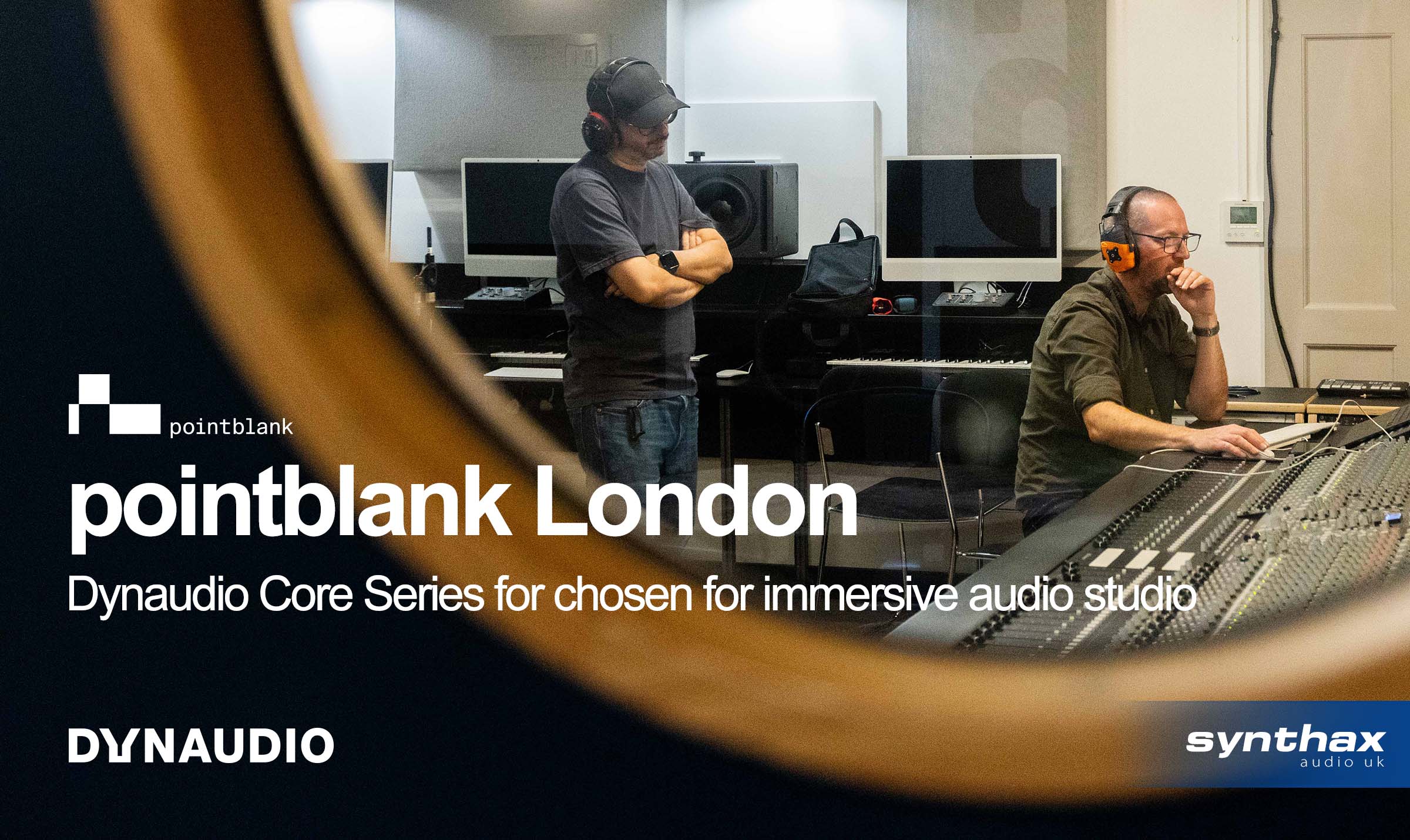
pointblank London chooses Dynaudio Core Series for immersive audio education
pointblank has invested in a new generation of immersive audio facilities at its London campuses, including a Dolby Atmos studio monitored by Dynaudio Core Series. We speak to pointblank’s Creative Director JC Concato and Acoustic Consultant Richard Stockdale about the thinking behind the room, the challenges of creating an accurate listening environment in a classroom, and why Dynaudio was the natural choice.
For pointblank, hands-on experience has always been at the heart of its approach to music education. With immersive and spatial audio becoming an increasingly important part of music production, the school has responded by investing in several dedicated Dolby Atmos facilities, designed to give students experience of a range of professional workflows and monitoring.
“We try to focus on making sure our lessons are delivered in a very hands-on, practical way,” explains JC Concato, Creative Director. “We’ve got different breakout groups and theory passages of the lesson, and then the hands-on experience. We all come from the music industry – everybody from lecturers to staff – and we know the importance of providing students with equipment that they’ll come across in their careers.”
See more videos at Synthax TV
That approach led pointblank to create three immersive audio studios, allowing students to experience mixing beyond stereo.
“Clearly there’s a need in the industry. And I think this need is only going to grow,” says JC on the demand for Dolby Atmos skills. “We need to prepare our students with employable skills. More and more services are requiring and delivering that type of format.
“Part of that is experience with a wide range of monitoring styles. That way when the students graduate, they have the confidence and skills to find employment, get a job, and immediately be good at their job. Again, it’s about preparing students for the future, which is why we now have several immersive audio spaces.”
Designing an immersive classroom
Creating an accurate Dolby Atmos monitoring environment is challenging enough in a dedicated studio. At pointblank, the room also needs to function as a classroom, with multiple students, computers, screens and other equipment all forming part of the space.
Acoustic Consultant Richard Stockdale was called upon to design the speaker layout and calibrate the room. With more than 25 years’ experience calibrating studios across post-production, music, television and live sound, he approached the project with both the acoustic and educational requirements in mind.
“The main challenge in a classroom is the amount of students that need to be in the main listening position, and ensuring that they can all have an accurate presentation,” Richard explains.
“Obviously this studio is a classroom as well. There are computers creating reflections in the room, and reflective writing surfaces, televisions, doorways etc. There’s a lot of hard surfaces, which means that we have to be very careful about loudspeaker placements and where the desks are, or the existing seating areas.”
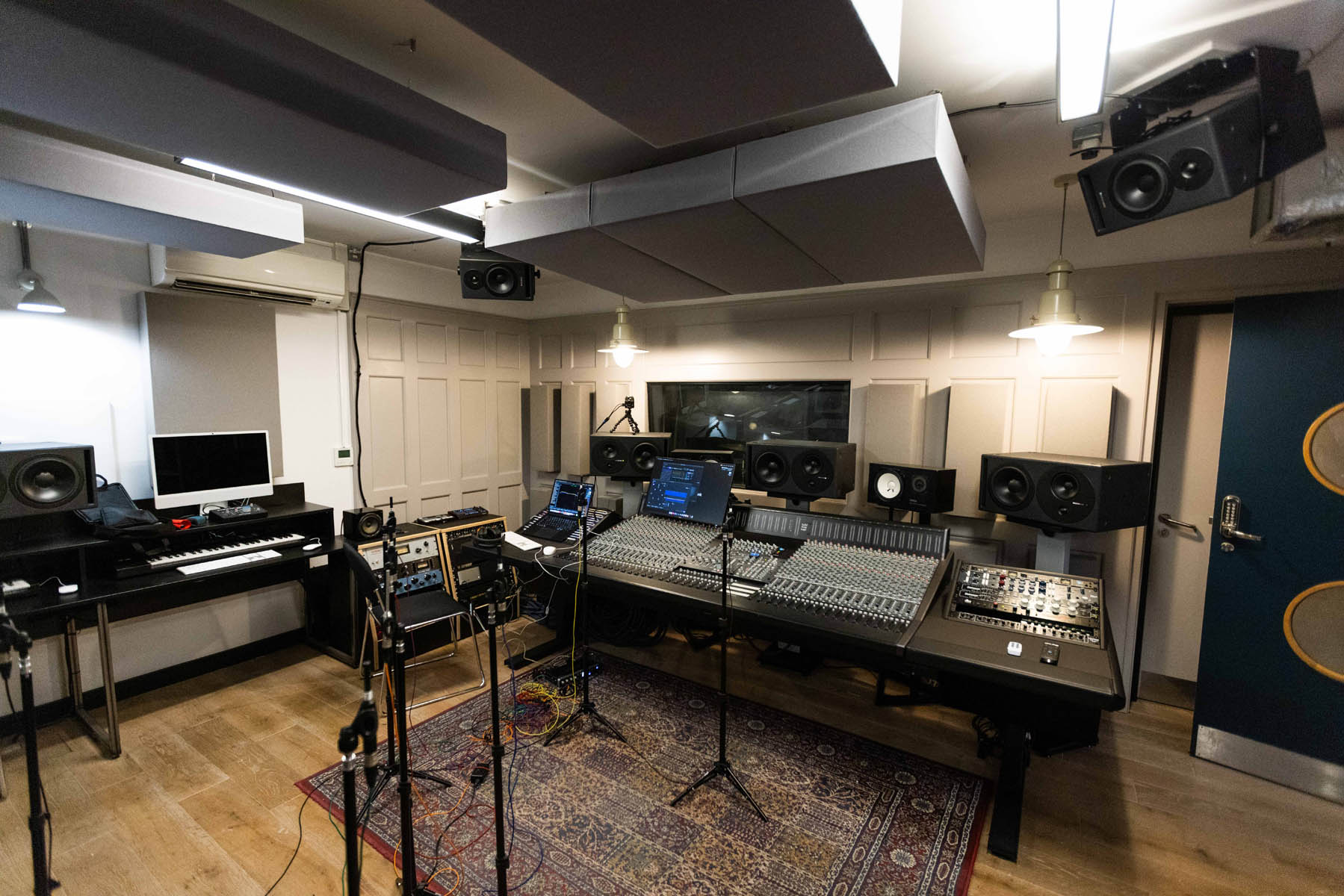
The solution included moving the listening area further back into the room, rather than designing it around a single engineer at a conventional mix position.
“The mix position in this particular studio is slightly different to normal,” Richard elaborates. “Usually you’d be sitting at the mixing console itself. But it’s a classroom with multiple students, not just a single Mix Engineer, so we’ve moved the main listening position back further to allow for a greater listening area.”
The Dolby Atmos studio is part of a wider refurbishment of pointblank’s London facilities, bringing new recording, rehearsal and performance spaces as well.
The room itself was developed through collaboration between pointblank, Dynaudio and GIK Acoustics, with the acoustic treatment and monitoring system designed around the specific requirements of the space.
“There’s always a challenge inevitably, in designing classrooms that also have the kind of monitoring accuracy of that of a professional recording studio,” says JC. “So we worked closely with GIK Acoustics, Dynaudio and Synthax Audio UK, in order to get the room to be the best-sounding possible. And I feel that we’ve got a really good bespoke system.”
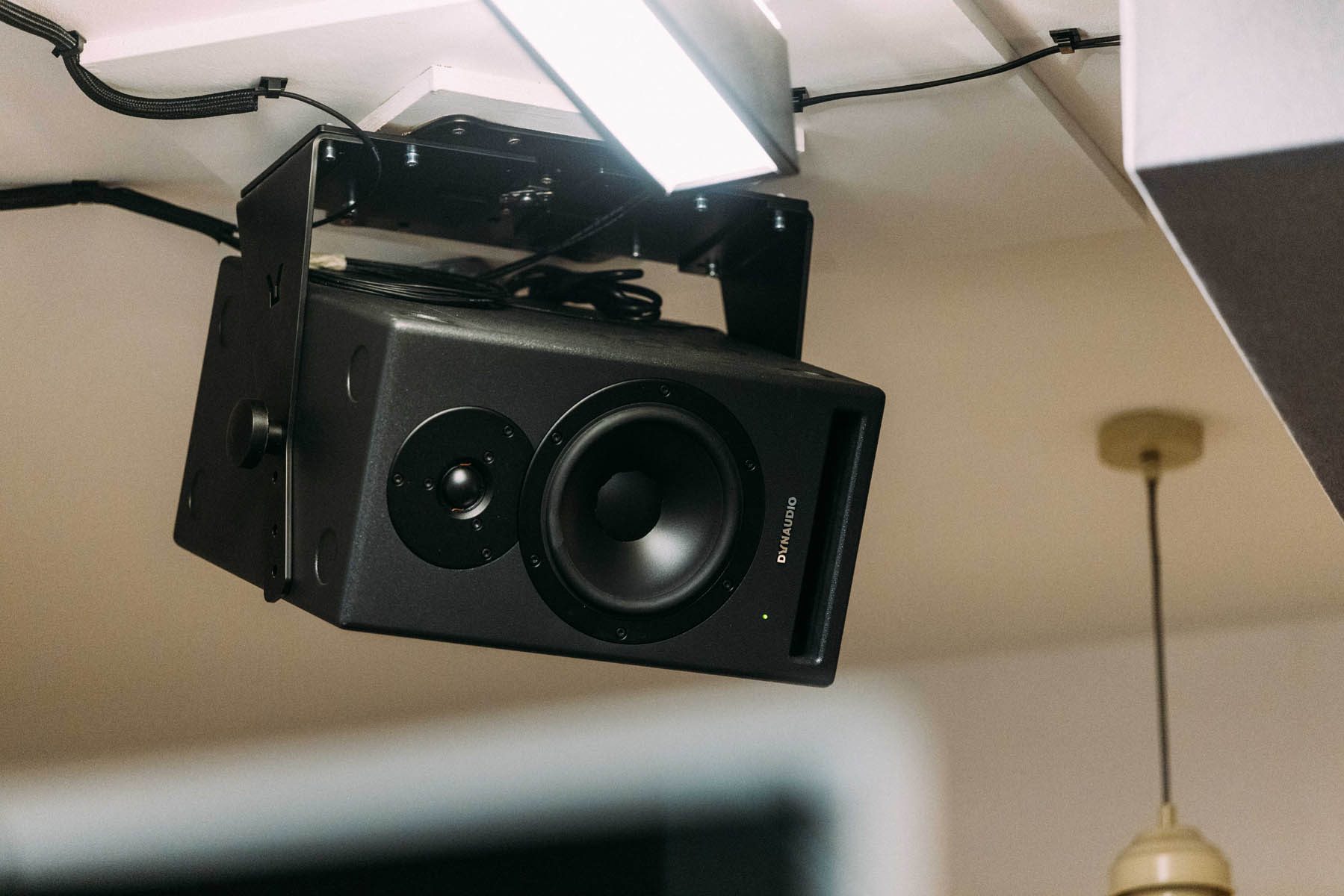
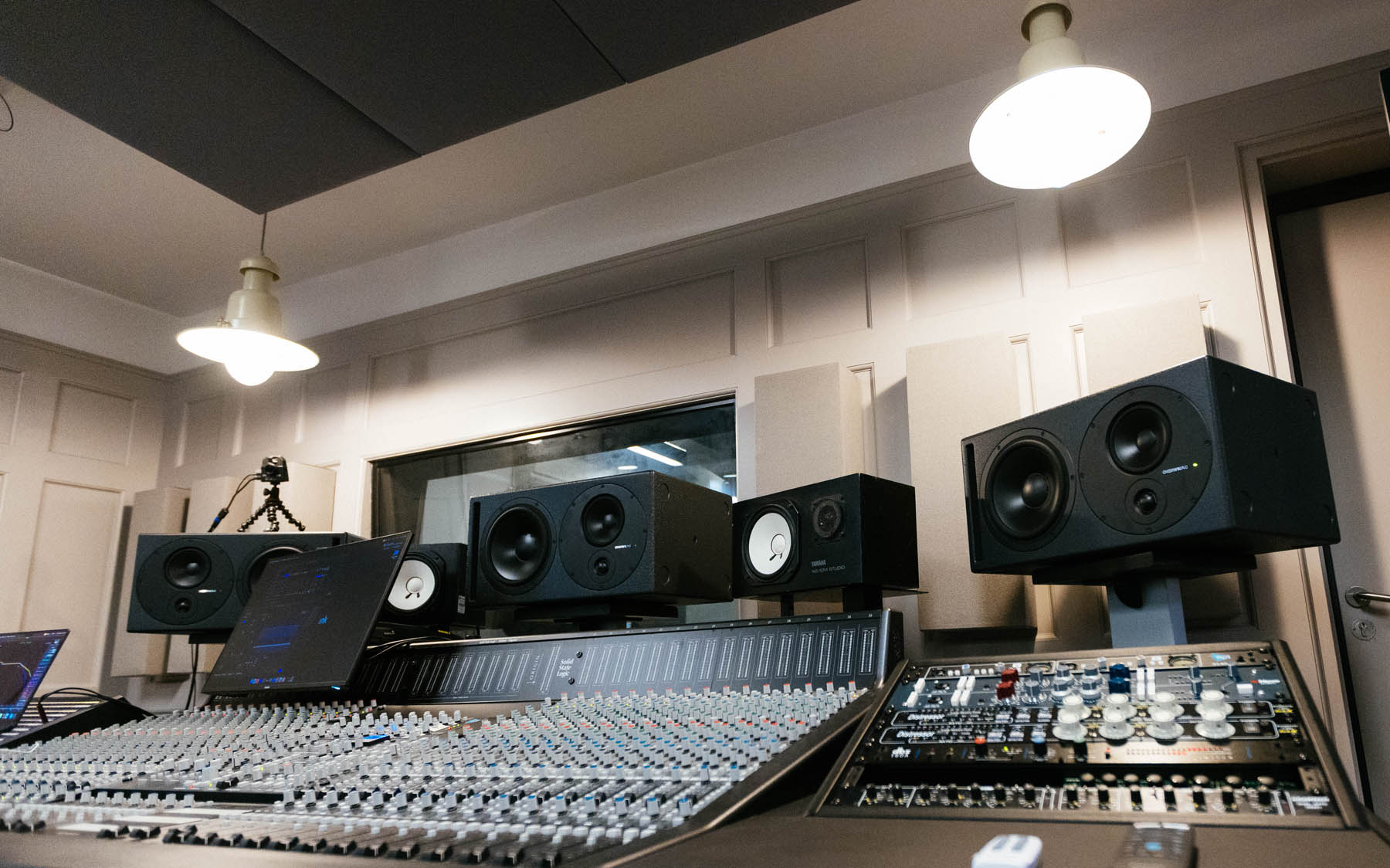
These discussions led pointblank to choose the Dynaudio Core Series, Dynaudio’s flagship studio monitors designed for use in professional recording studios, with a 7.1.4 system made up of:
- 3 x Dynaudio Core 59 (LCR)
- 4 x Dynaudio Core 59 (Sides, Rears)
- 4 x Dynaudio Core 7 (Cloud)
- 1 x Dynaudio Core Sub (Sub/LFE)
Calibrating for Dolby Atmos
Once the loudspeakers were installed, Richard’s first task was to understand how the size, shape and contents of the room affect its acoustics.
“The process of calibrating any studio, and an Atmos studio in particular, is about understanding the acoustic signature of the room itself,” he says.
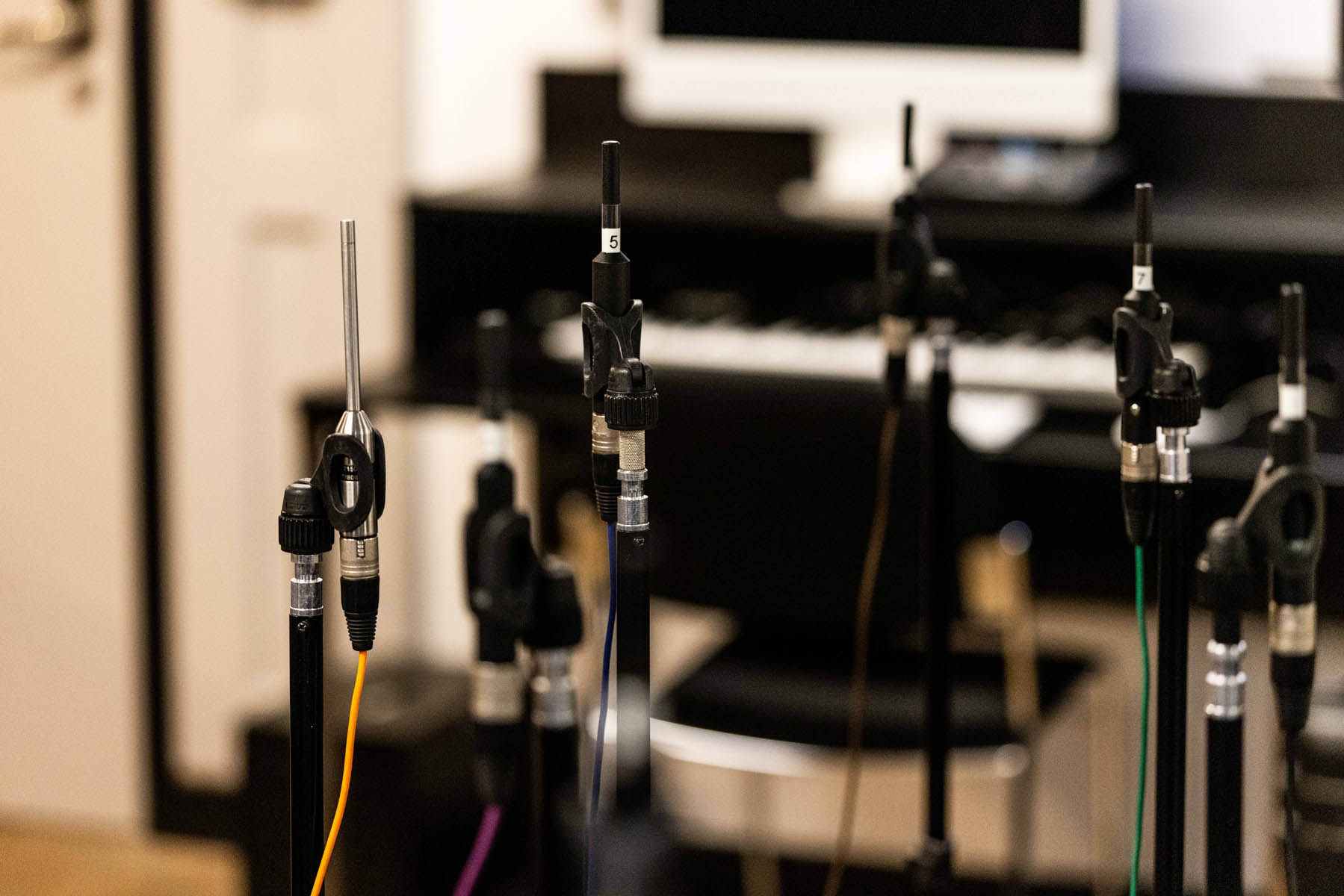
“This involves setting up microphones – we traditionally use eight, but they’re not placed at random. You have to analyse the space; understand where there might be acoustic issues; which issues you want to measure; and then how you would average all of those results together.
“We use industry-standard measurements and equipment, then work towards the target curve for Dolby Atmos music studios. This involves using pink noise as a reference tone, at a known calibrated level. We’re then working towards bringing that inline with Dolby’s specifications, to ensure that the studio is aligned and calibrated correctly.”
For pointblank, having that final calibration carried out by an experienced specialist was an important part of the project.
“It was very important to get somebody who has that experience in the industry,” says JC. “We’ve invested so much in getting these facilities to a really high standard. From the refurbishment in every room, to the equipment, the speakers and the monitoring. A lot of work has been put in. So it was really important that that final touch was on the same level as the equipment.”
“Richard has calibrated the biggest mixing studio theatres and recording studios in the world. He’s calibrated and worked at Pinewood, where a lot of big movies are mixed. That’s his specialty. So having him on board gave us a kind of ‘seal of guarantee’ that we were getting the best out of the system, and we’re really confident that the students are getting the best possible experience in this environment.
“On top of that we know Richard has worked extensively with Dynaudio, so there was no doubt for us it was the perfect match.”
Why Dynaudio?
For JC, choosing Dynaudio was also informed by many years of personal experience with the brand. His first experience with Dynaudio speakers made a lasting impression, particularly when he heard how well a mix translated outside the studio.
“In my music career I’ve had quite a bit of experience with Dynaudio speakers, from back in the early 90s,” says JC. “A lot of the recording studios, and a lot of the producers I used to mix and engineer for, used to have the BM15 speakers.
“I remember the first producer that I worked with – from the first time I worked with him – I was really, really impressed with the way the mix translated when taken outside. And that was my first experience with Dynaudio.”
For JC, that ability to work for long periods while maintaining a reliable perspective on the mix remains important.
“I do find them really pleasant to work with over a long period of time. You don’t have that kind of ear fatigue that maybe you can get with some other speakers, depending on what level you’re working at. But also more importantly, the fact that they translate so well is a big factor.”
Those qualities made Dynaudio a natural choice for the new immersive facility.
“For those reasons it was a no-brainer decision when it came to designing our latest immersive audio studio. And also the fact that Dynaudio is used extensively in post-production, it was clearly the right choice to prepare our students for equipment they’ll work with in the future.”
A room ready for the next generation
For JC, the value of a properly designed and calibrated system extends beyond simply learning how to mix in Atmos – it’s also about developing critical listening skills.
“Most people will at some point do some work in the bedroom,” he says. “The gap in equipment between a commercial studio and a home studio has closed a lot, but you’ll still end up working in the bedroom. And most bedroom producers and students probably won’t have the physical space to set up a Dolby Atmos system.”
“You can do it on cheaper speakers and get an experience – and you can even do it on headphones through binaural etc. But I think there’s something in – like we’ve seen today, having calibrated the system and finally being able to listen to it – the experience is just something else altogether.”
“I think that’s the key in having high-end, professional monitoring – to be able to develop critical listening. And then be able to compare with maybe the speakers you have at home, the headphones that you have at home, the studio that you’re going to collaborate in with your mate.”
“Certainly you’re starting with a fuller picture about ‘what is critical listening?’. And then you’re able to make better decisions as you continue to develop that skill.”
Following the final calibration, JC’s reaction was immediate.
“It’s a bit like finishing a big music project. Like when you finish a record. It was great to finally get to hear the room with everything calibrated. And I’ve got to say, the room sounds really great.”

“Everybody had a kind of a big smile on their face, and I’m really looking forward to welcoming students to the room and seeing how they develop.”
Perhaps the ultimate endorsement of the new facility, is that the person responsible for overseeing its educational use is already eager to use it himself.
“Personally I can’t wait. I genuinely can’t wait to put students in here,” finishes JC. “Because I genuinely feel this is something great – as soon as I heard it, it made me want to mix something myself in here in Dolby Atmos.”
Our thanks to JC, Richard Stockdale and pointblank Music.
To find out more about the eduction offered at pointblank, visit
www.pointblankmusicschool.com
See the full range of Dynaudio Studio Monitors

Dynaudio is world-famous for making hand-crafted high-end loudspeakers for living rooms, home cinemas, cars and professional recording studios.
Since the beginning in 1977, the company has made iconic products rooted in a love of music and film – reproducing exactly what the artist intended. Nothing more, nothing less.