




















Dynaudio powers new benchmark for Immersive Audio and Research
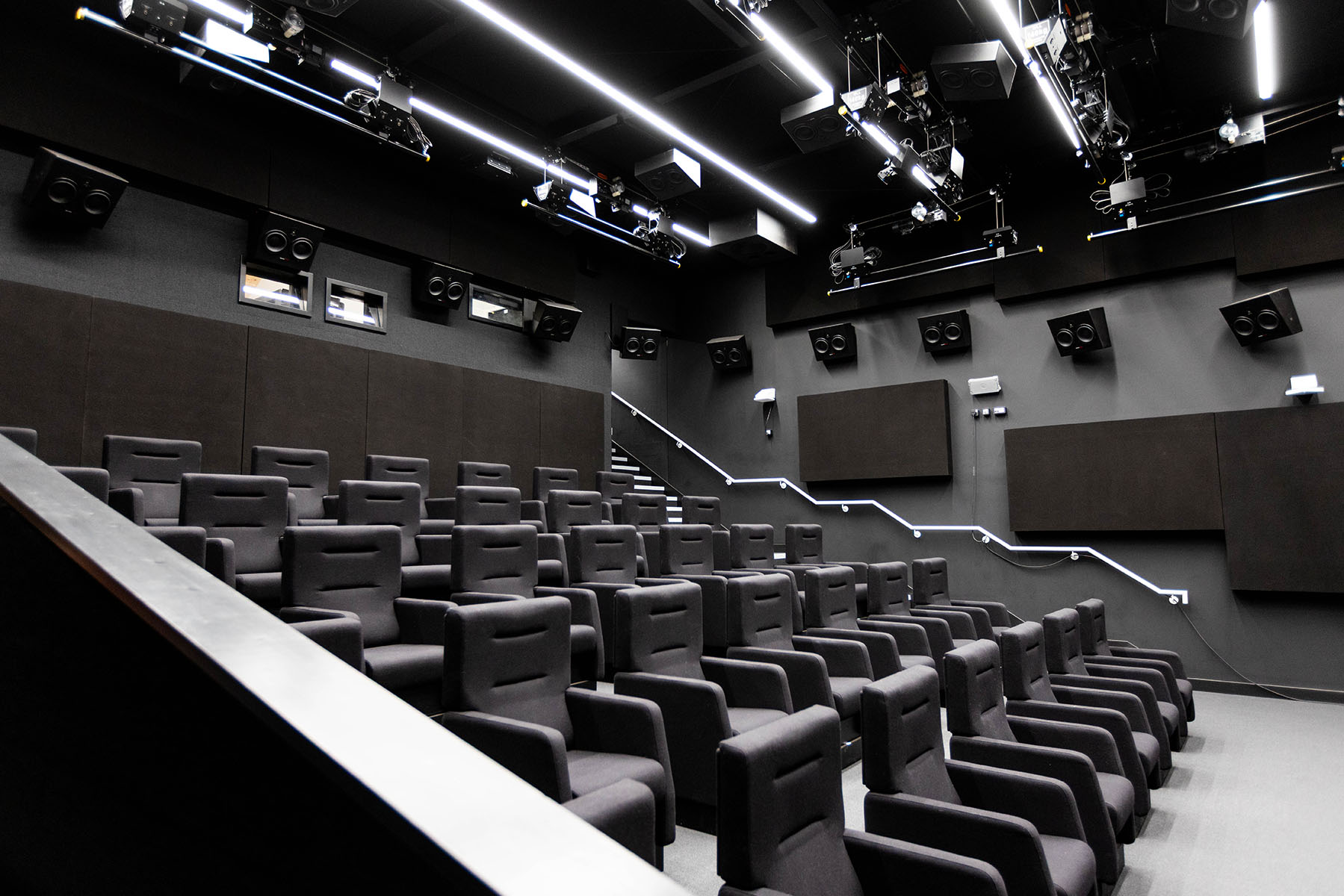
In Bristol (UK) a pioneering facility is quietly redefining the limits of a traditional cinema. Part of the wider MyWorld programme in the West of England, the MyWorld Smart Cinema is no regular cinema – it’s a hybrid environment where cutting-edge audio, advanced visual systems and biometric research come together.
A Dolby Atmos-enabled space certified for both theatrical playback and use as a dubbing theatre, the project was led by Facilities Lead Dave Blackham, known for his work in film and television at the BBC and as Head of Operations at ITV, before starting his company Esprit Film.
We sat down with Dave and Studio Technician Emilia Quistelli to find out why Dynaudio Acoustics’ M-series loudspeakers were cast in the starring role.
A cinema that watches back
“A Smart Cinema isn’t just a regular cinema,” explains Emilia Quistelli, Studio Technician at MyWorld. “It allows you to dig deeper into audience research using biometric monitoring. We have eye tracking, EEG headsets, heart rate monitors and infrared cameras. All of that data is fed into analytical systems and put through a matrix that we can hand off to researchers, or anyone else who might need the information.”
The result is a space that’s not just about viewing content, but viewing the viewers. Audience engagement can be measured at a granular level, opening up new possibilities for everything from film production and test screenings to medical research.
Part of a larger £30 million research programme that’s pioneering creative technologies and audience response, the Smart Cinema is owned and operated by the University of Bristol, with additional partners including the University of Bath, Bath Spa University and the University of the West of England, as well as a range of commercial organisations.
This collaborative model enables a wide variety of research projects, many of which rely heavily on accurate and consistent audio reproduction.
“The medical department is carrying out research into autism in here,” Emilia explains. “Sound is really, really important to their research. The autonomic response system often works differently in autistic people compared with neurotypical people. Hopefully what they find out here can be used to help develop new treatments and techniques.”
Alongside research projects, the space is also used for various screenings, presentations, events, commercial hire and education. Filmmakers can review rushes captured at the other facilities at MyWorld The Sheds – which also includes a Virtual production stage, Live audio and vision galleries, and a VR ‘Reality Emulator’ – while students gain hands-on experience in a world-class environment.
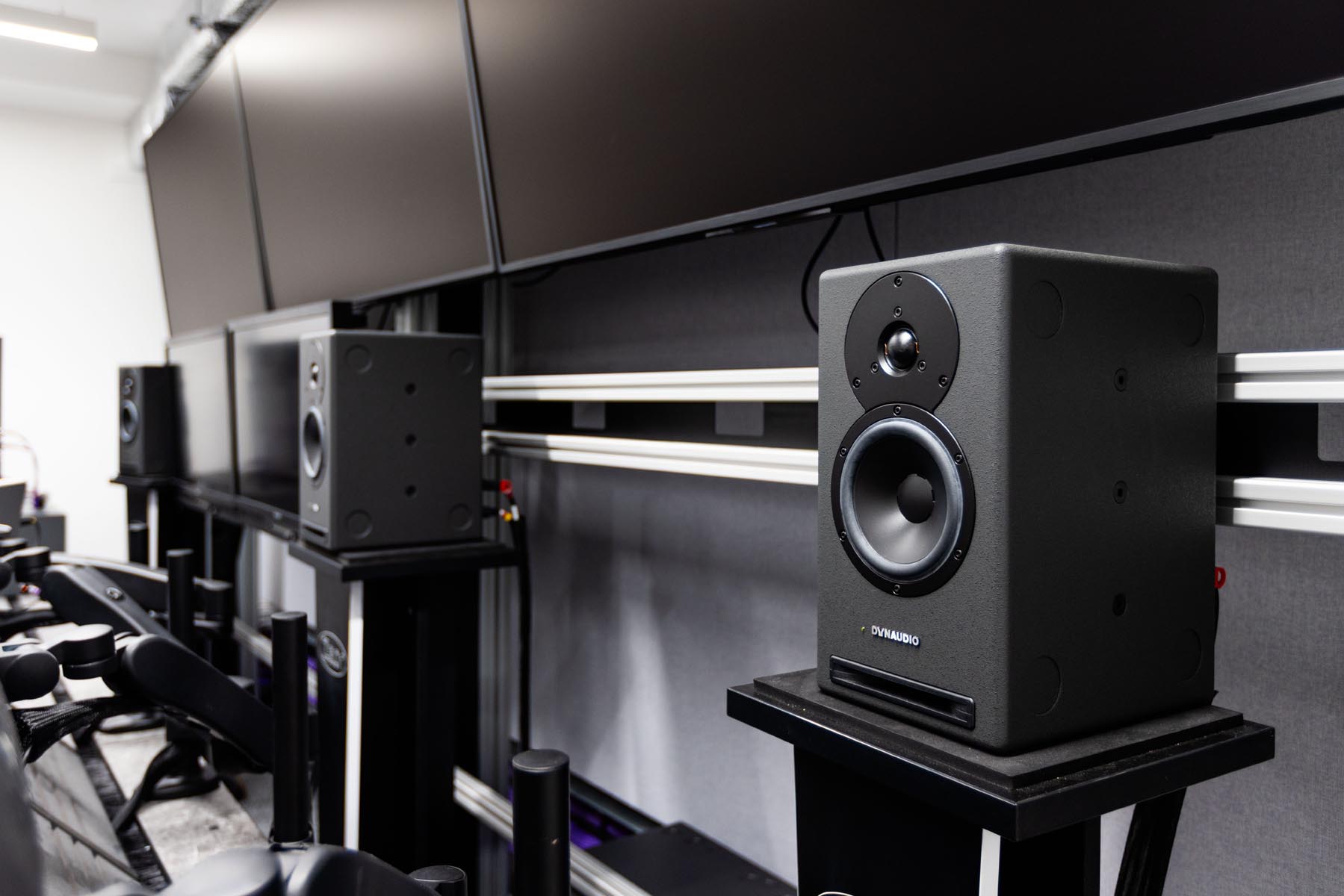
MyWorld also has several Edit Suites equipped with Dynaudio Core Series
Designing a Complex, Multi-Use Space
“It was quite a challenge to pull in all of the requirements,” says Facilities Lead Dave Blackham. “Screen technology, audio technology, and biometric technology. Trying to interpret a creative and engineering brief into a practical solution.”
A team of specialists were brought in including systems integrator Megahertz Ltd, alongside acoustic consultants and loudspeaker experts from Dynaudio.
The complexity of the brief was compounded by evolving requirements: initially conceived as a cinema, the specification later expanded to include full dubbing theatre capabilities.
“Partway through the project, the specification changed, and it had to be a Dolby mix room as well,” Dave explains. “That caused a few anxious moments. Thankfully with a couple of minor acoustic modifications we were able to match the requirements, so we can actually use this room as a Dolby approved mix facility now as well.
“We support a wide range of formats – 5.1, 7.1, 9.1.6, and others – both discrete and matrix. And we’re also exploring wavefront technologies. But, you know, things will change tomorrow. The only thing that is certain in life is things are going to change in future.”
Why the Dynaudio M-series?
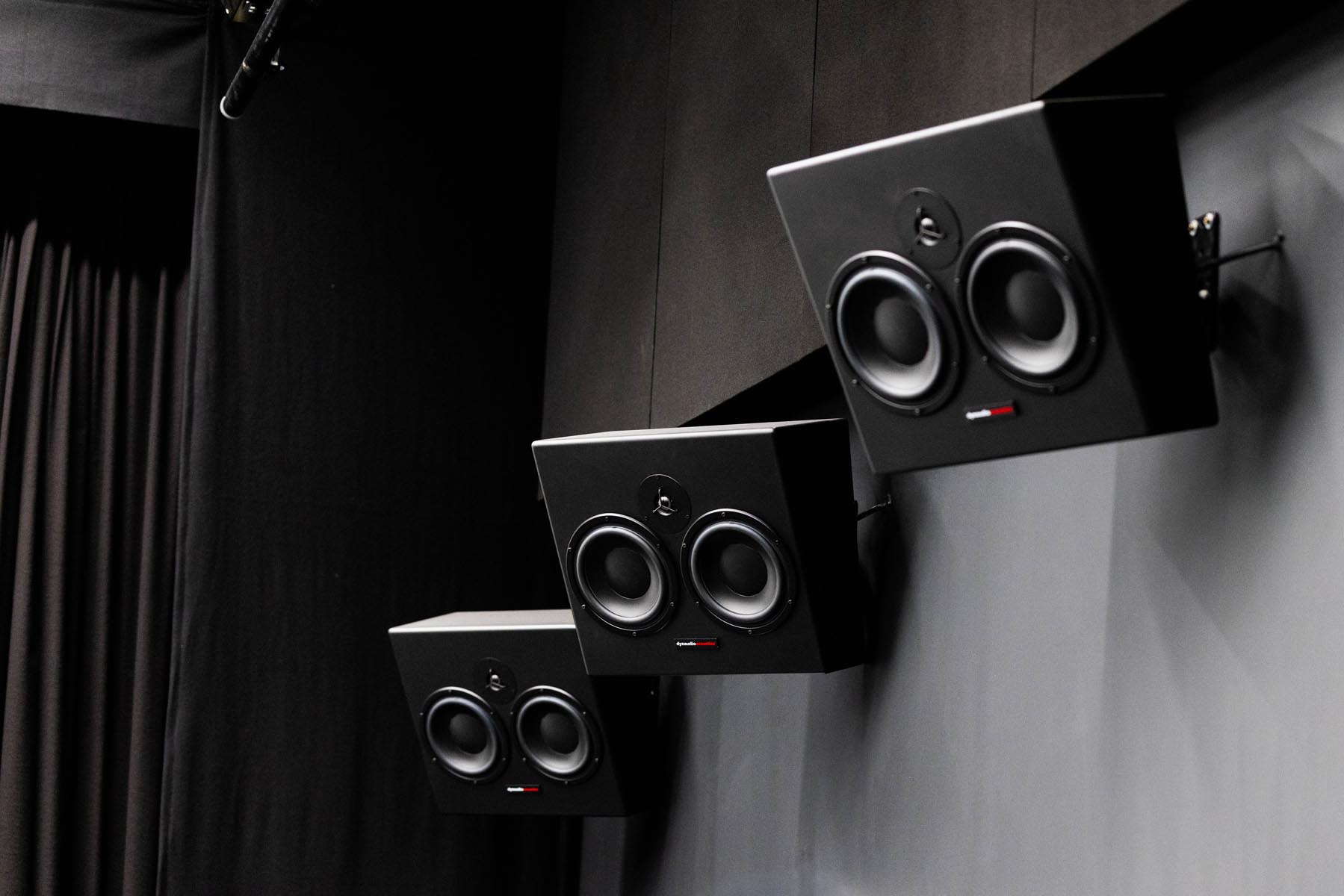
At the heart of this ambitious project are the Dynaudio M-Series MkII monitors, Dynaudio’s high-performance studio monitors enabling the space meets the world-class technical performance required.
“I’m very familiar with Dynaudio speakers from my time working in dubbing theatres for television,” Dave says. “I should point out that I didn’t go into it thinking we’d just choose Dynaudio. We evaluated a number of systems from different manufacturers, and canvassed opinions from colleagues in both the UK and the US, working in dubbing theatres, studios, and music studios too – as well as what was being used in mainstream cinema.”
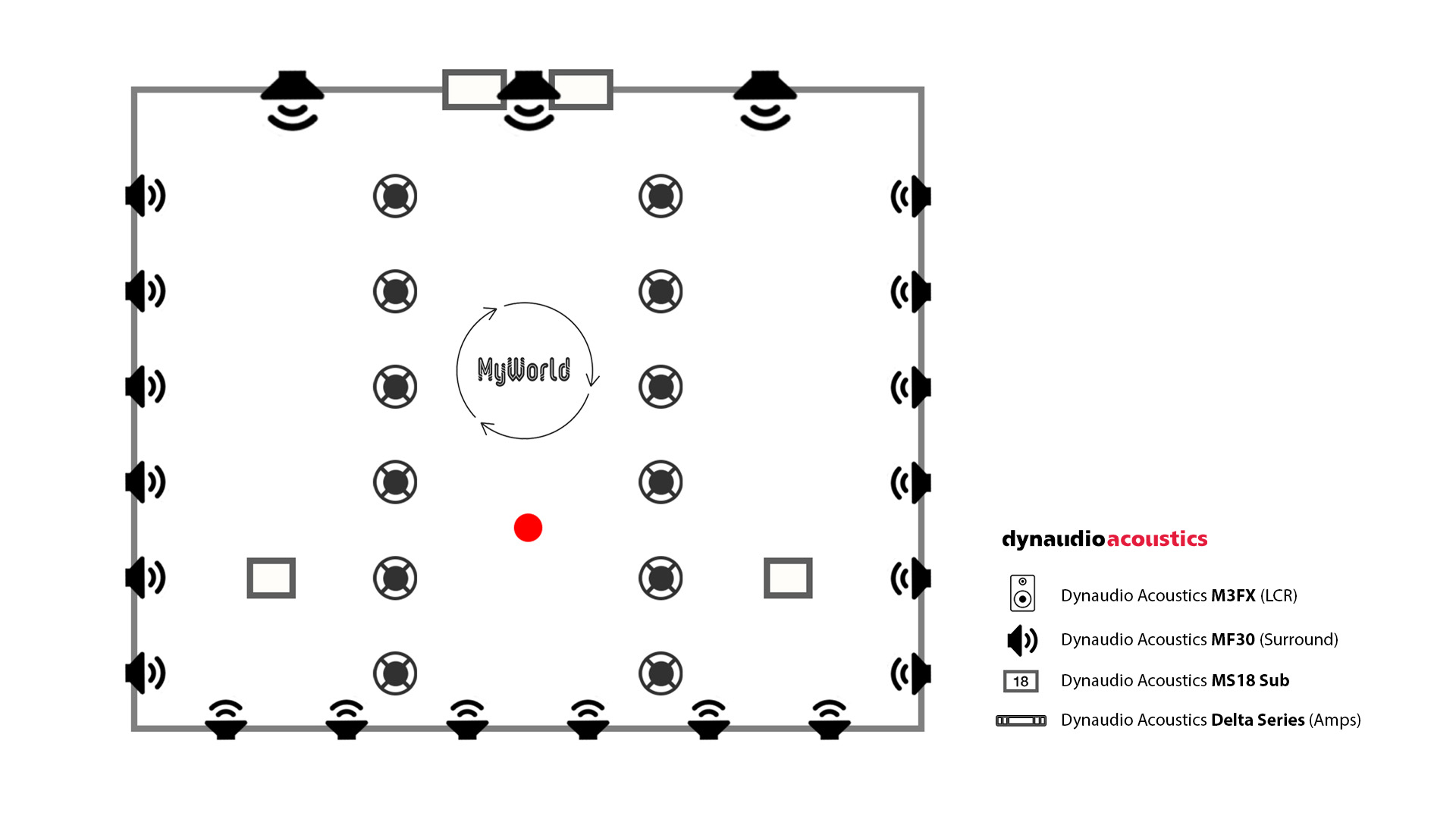
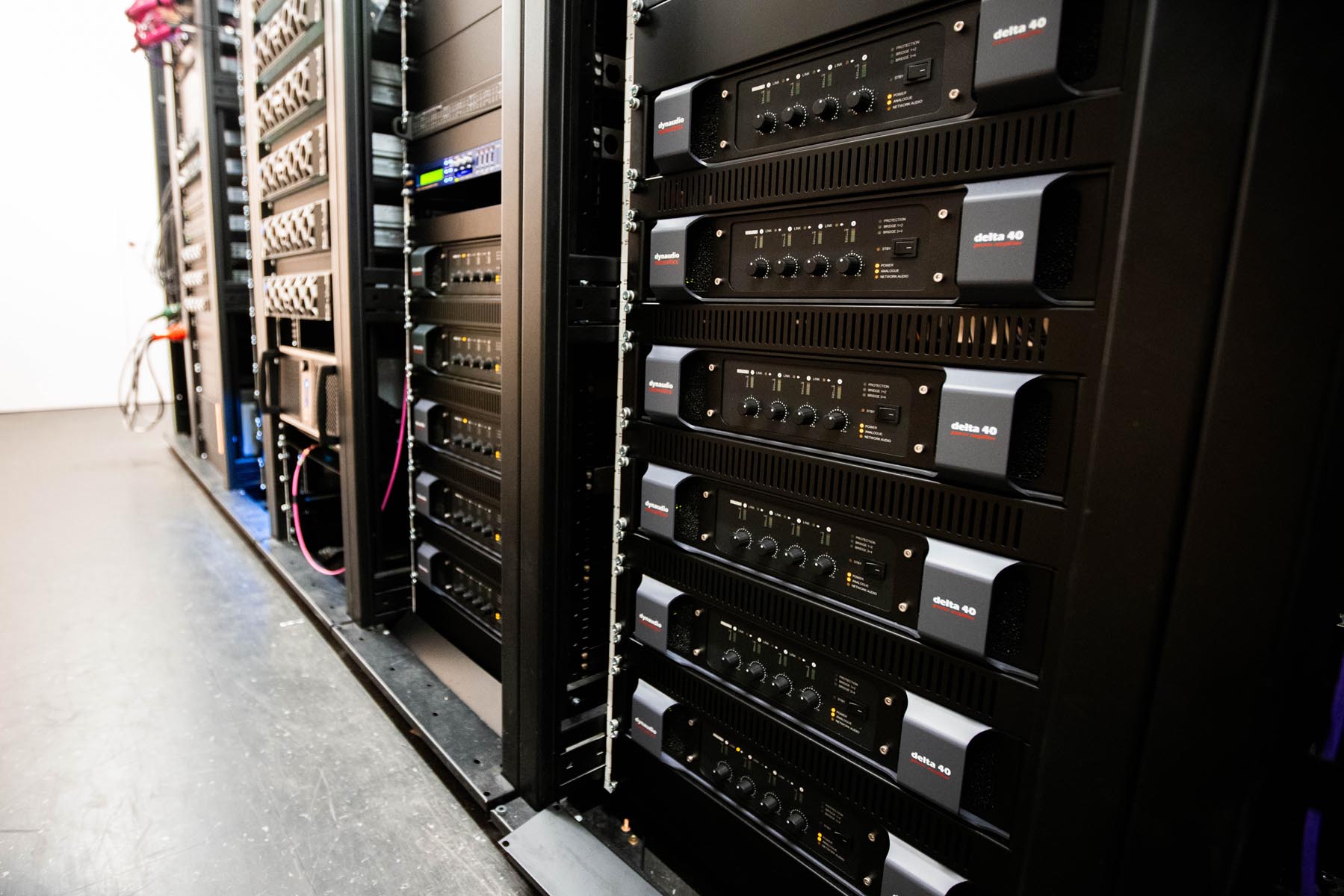
The requirements were stringent: high sound pressure levels, low distortion, neutral sound, and compliance with Dolby specifications – all within a challenging acoustic environment, and without straying over budget. Phil Pyatt of Dynaudio Acoustics was brought in to specify the system, which consists of the following Dynaudio M-series speakers and Delta Amplifiers:
- 3 x M3FX for LCR
- 30 x MF30 surround speakers for overheads
- 6 x MS18 Subs
- 40KW power amplification
“Philip Pyatt specified the speakers for us based on the spec we required,” Daves says. “I’d much rather rely on his advice, he’s the expert in that regard. The same with the amplifiers, that’s all Dynaudio Acoustics. It’s all part of the same system, completely specified by Phil. He and Dynaudio Acoustics did a fantastic job. I didn’t feel the need to question it at all.”
For Dave, the defining characteristic of the system is its neutrality.
“What I didn’t want was to have colleagues, clients or researchers saying ‘wow, that sounds great.’ Well yes, of course it sounds great, but it’s sounding great from the point of view of the content, rather than people commenting on the loudspeakers or the technology.”
This philosophy is especially critical in a research environment, where any colouration could skew results.
“The technology needs to be transparent. And by and large, the room is. It’s not adding anything that would bias the scientific research we’re doing.”
“We also knew the building was going to be quite difficult acoustically. You’ve got to meet Dolby specs, achieve the appropriate levels for cinema replay, and ensure neutral sound throughout. Although this is a cinema, it’s designed more like a very large dubbing theatre.”
Ultimately, the Dynaudio M-series proved to be the right fit – both technically and sonically.
“It’s uncoloured, but not to the point of being boring. It’s a very nice space to work in.”
“We’ve also installed Dynaudio speakers throughout the edit suites. Core 5s, Core 7s, Core 47s – it’s all part of the same family. You don’t want different colouration from room to room. You want to trust what you’re hearing, wherever you are in the facility.”
The success of the Smart Cinema has not gone unnoticed.
“We’ve already had interest from other clients looking to build similar spaces,” Dave says. “And I’d have no hesitation in recommending Dynaudio Acoustics for those projects.”
Our thanks to Dave Blackham and Emilia Quistelli.
To find out more about the innovations being developed at the MyWorld at the Smart Cinema, visit:
www.myworld-creates.com.
About Dynaudio M-series
The Dynaudio M-Series MkII monitors represent a once-in-a-generation evolution of the legendary M-Series, expertly engineered in the UK by Dynaudio Acoustics (formerly Munro Acoustics).
Building on a legacy of trusted main monitors in world-class studios such as AIR Studios and Abbey Road Studios, the M-series MkII delivers a complete, uncompromising monitoring system for today’s professional studios.
Combining precision passive design with Dynaudio’s perfectly matched Delta Series amplifiers – developed in association with MC2 – and supported by dedicated control solutions such as the Control 01 – the Dynaudio M-series MkII provides exceptional coherence, control and accuracy at every stage of reproduction.
See the full range of Dynaudio M-series MK-II Monitors

Dynaudio is world-famous for making hand-crafted high-end loudspeakers for living rooms, home cinemas, cars and professional recording studios.
Since the beginning in 1977, the company has made iconic products rooted in a love of music and film – reproducing exactly what the artist intended. Nothing more, nothing less.