















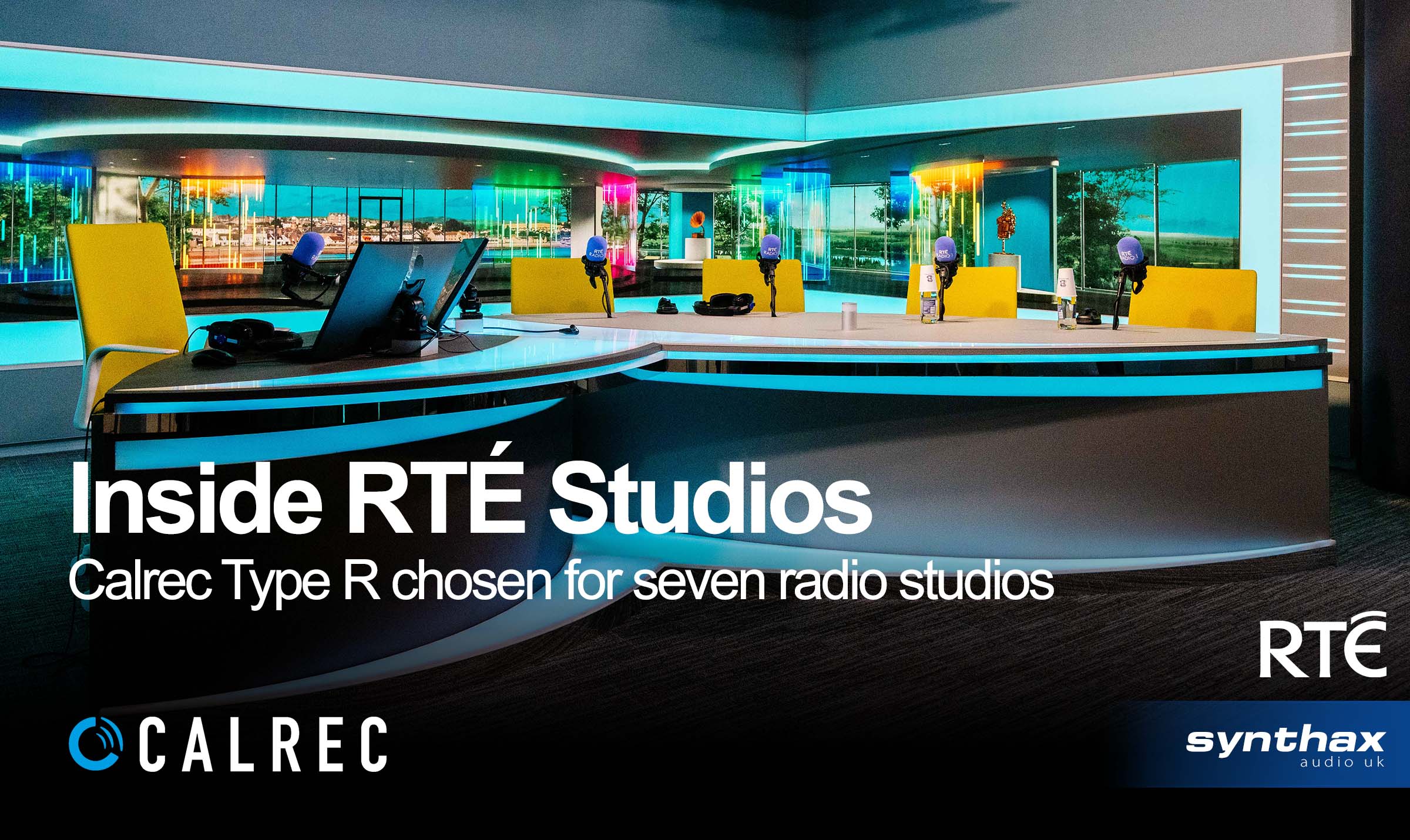
RTÉ’s Roland de Groot and Anthony McGing explain their choice of Calrec Type R broadcast console at RTÉ’s main Radio and TV Studios.
When Ireland’s national broadcaster needed to cover 104 matches for the 2026 World Cup from its studios in Dublin, the team had a fairly straightforward problem on paper: six off-tube commentary positions, each producing its own mix, and a requirement to bring all of that into one operational area.
Seeing an opportunity to simplify the workflow, RTÉ’s Roland de Groot, Media Production & Infrastructure Manager, and his team devised a system that could utilise the studio’s existing IP network, whilst also reducing the number of required operators.
The solution was based around Calrec’s modular Type R – a console RTÉ was already familiar with from its radio operations – becoming a demonstration of what broadcasters typically value in a system: standardisation, flexibility, and infrastructure that can be adapted without having to rebuild the entire operation.
From six areas to one
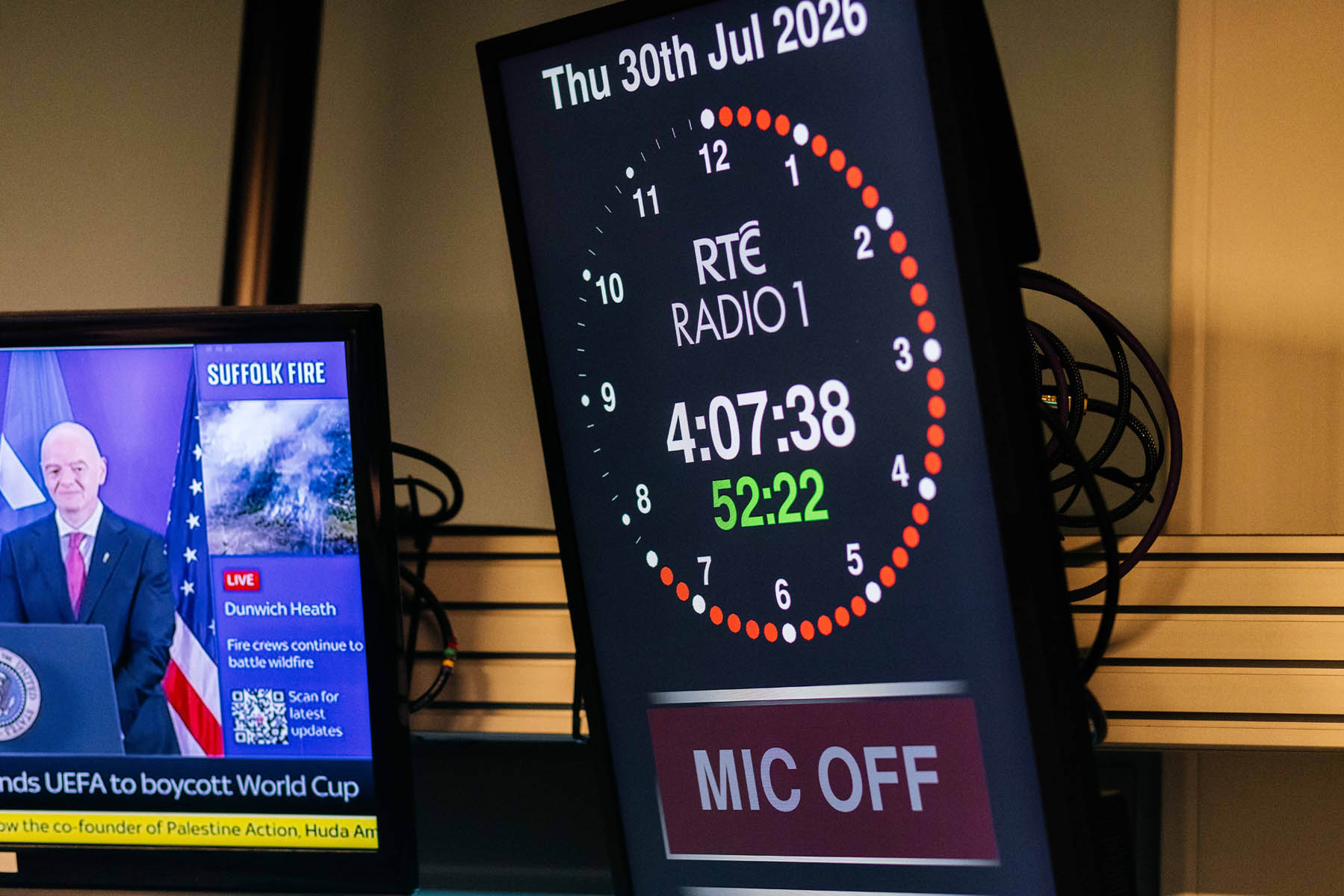
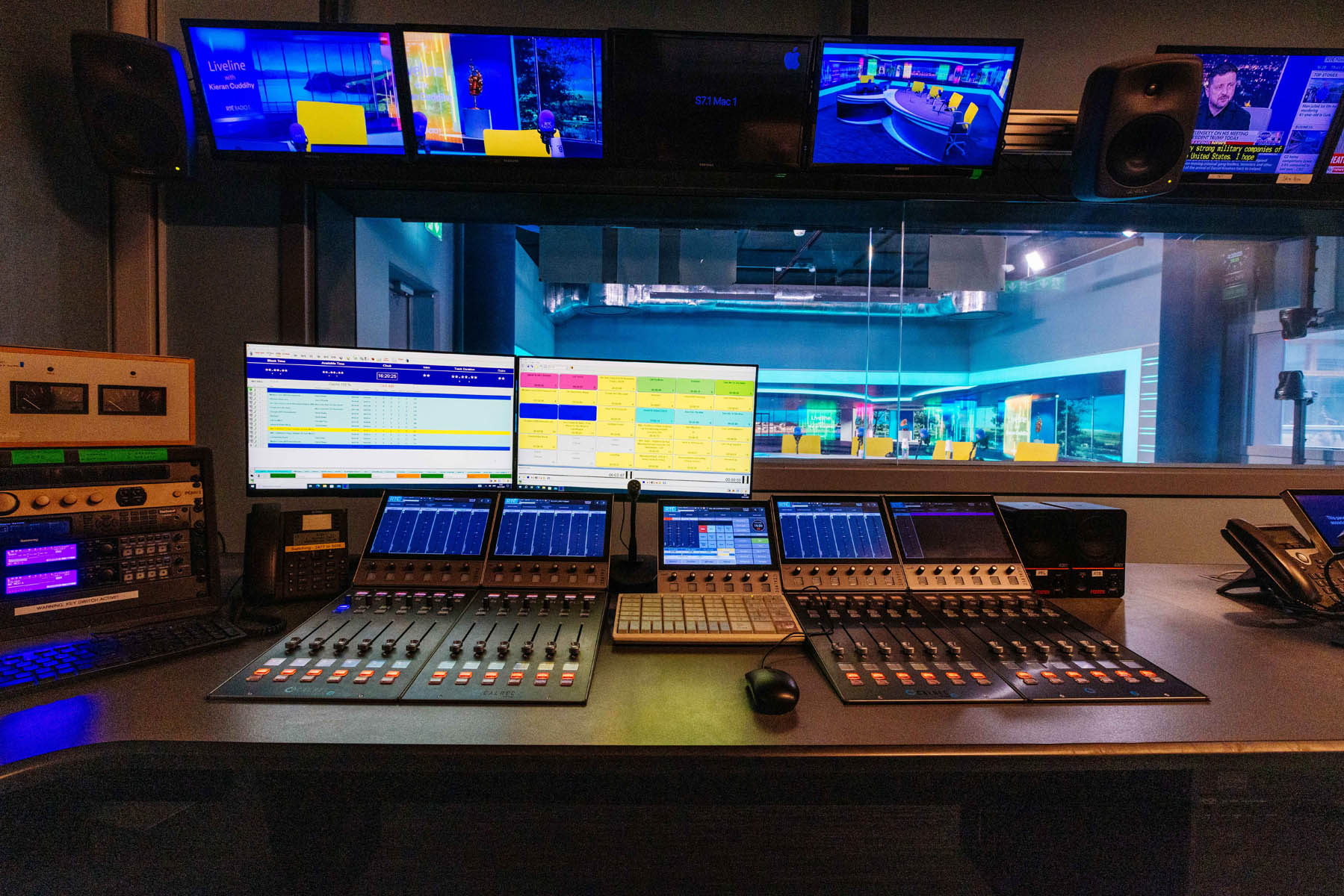
“We have six off-tube commentary booths,” Roland explains. “Previously, these were connected to up to six individual audio mixers. Obviously, quite a few people need to be scheduled to operate and mix that. So the brief was basically to find a way to create a multi-mix area where all these signals come into, and they can be mixed by one Sound Op, as opposed to potentially up to six.”
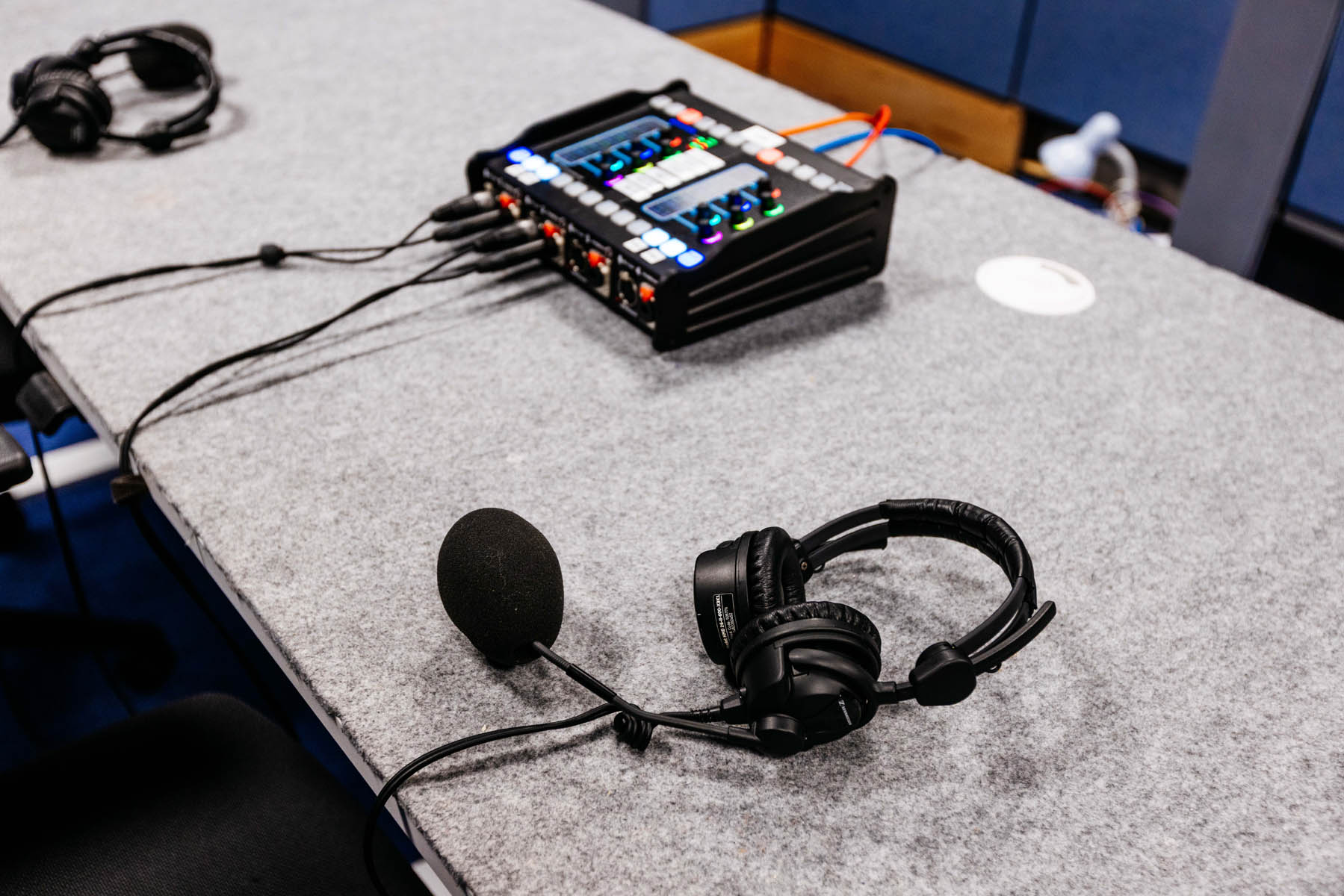
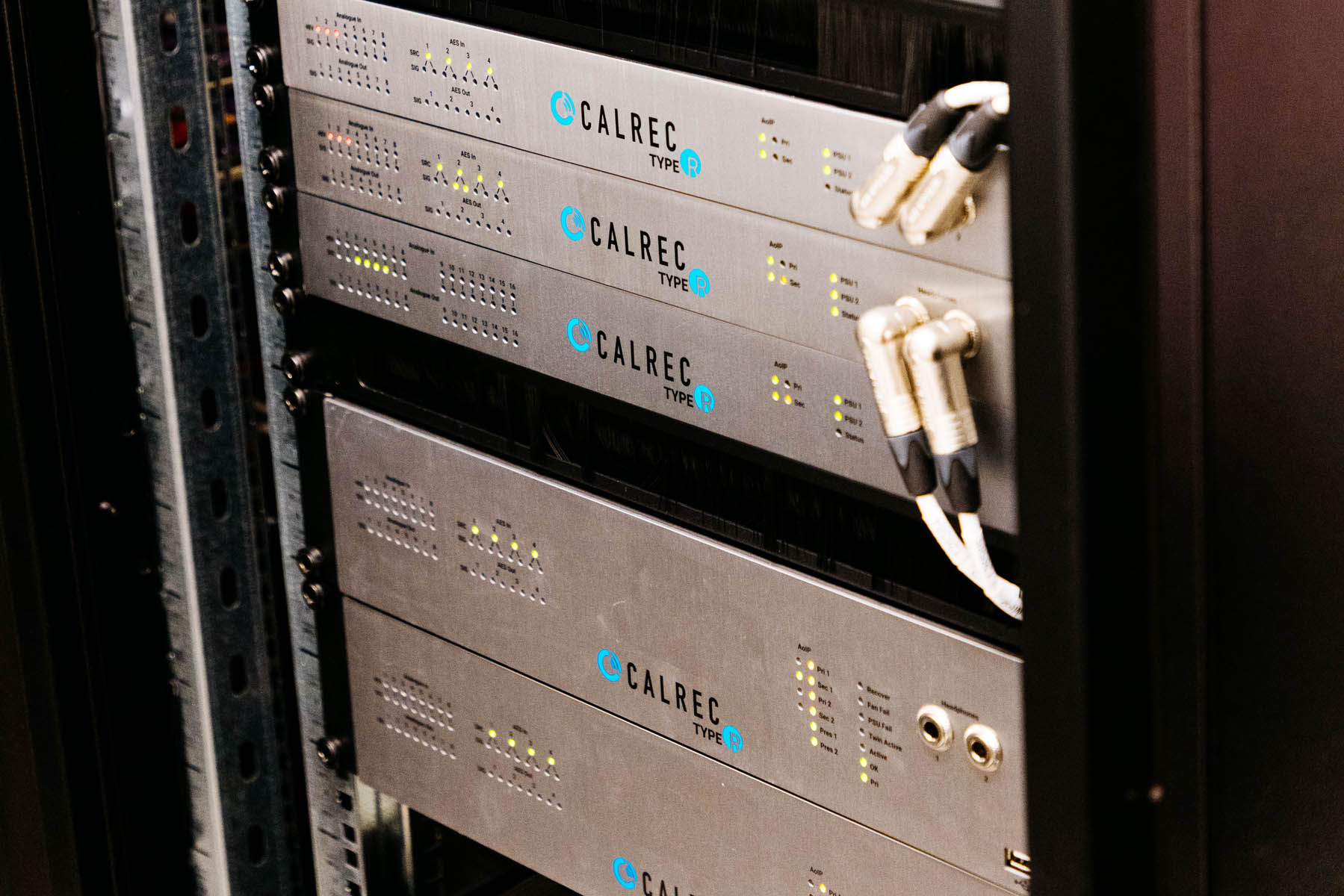
The resulting setup uses a Type R system with dual main and redundant cores, an analogue breakout box, and connectivity to RTÉ’s SMPTE ST 2110 network. “All the signals, all the sources, all the destinations, are connected to our 2110 house router,” continues Roland. “And so all this combined allowed us to build this very powerful, very flexible system.”
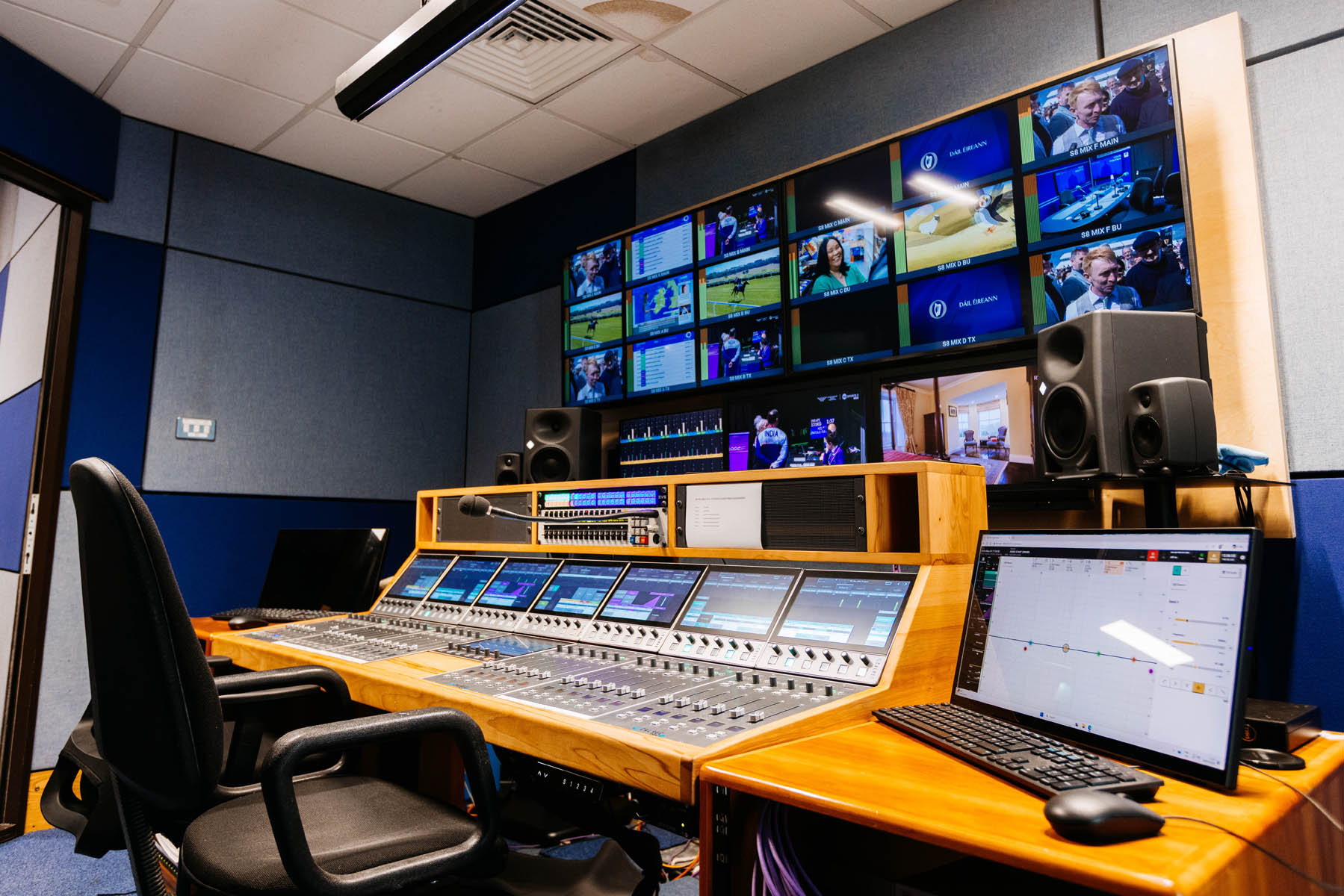
The console layout mirrors the six commentary booths, with each represented by a fader panel. Operators can bring in the relevant microphones, international sound, guide feeds and other sources, routing them to the required mix. A second layer of each panel provides control of auxiliary buses and outputs.
“Each panel is one off-tube. So this fader is mic one, mic two… This is your international sound, that’s your guide. But they can route anything they want into here, and bring that into the mix, or so they can listen to it. And then the second layer of that panel is used to control Aux buses and outputs. It’s all very logical.”
The obvious benefit of switching to a single desk was the reduction in the number of operators needed – four operators were involved in mixing all 104 matches, compared with potentially needing to staff up to six individual mixing positions.
The project also highlighted the importance of making systems straightforward to operate and support – operators have the flexibility to route sources and select from different LSP layouts, whilst the overall desk configuration remains locked down. This gives staff a consistent working environment, particularly when shifts change, or more than one mix is on air.
A standardised platform across RTÉ’s radio studios
The same emphasis on flexibility and consistency is evident in RTÉ’s wider adoption of Calrec Type R across its radio and TV studios in Dublin, as explained by Senior Broadcast Engineer Anthony McGing, who has been involved in deploying the consoles across seven radio studios.
RTÉ broadcasts five radio stations: Radio 1, 2FM, Lyric FM, Raidió na Gaeltachta (RnaG) and Gold. Some studios serve particular stations, while others can be shared across different programmes and formats.
“2FM generally has two studios that they use, both with Type R,” Anthony explains. “And then the rest of the studios can be used either for RnaG, Radio 1 or Gold. So in total we have seven studios now with the Type R.”
The rollout began in Studio 3 and S71, the main visual radio studios, before expanding to another five studios in the Radio Centre. An ageing fleet of Studer consoles was the main driver for the upgrade, particularly as spare parts had become increasingly difficult to obtain.
“We came to a situation where we had a fleet of Studer 3000s, and you couldn’t get spares for them anymore,” Anthony reflects. “The rest of the studios were still running the other 3000s. So something had to be done, because it was a ticking time bomb.”
The move to Type R has enabled RTÉ to standardise its studios while still accommodating different ways of working. Anthony describes three configurations at RTÉ: engineer-operated studios, self-operated studios, and hybrid spaces that combine the two.
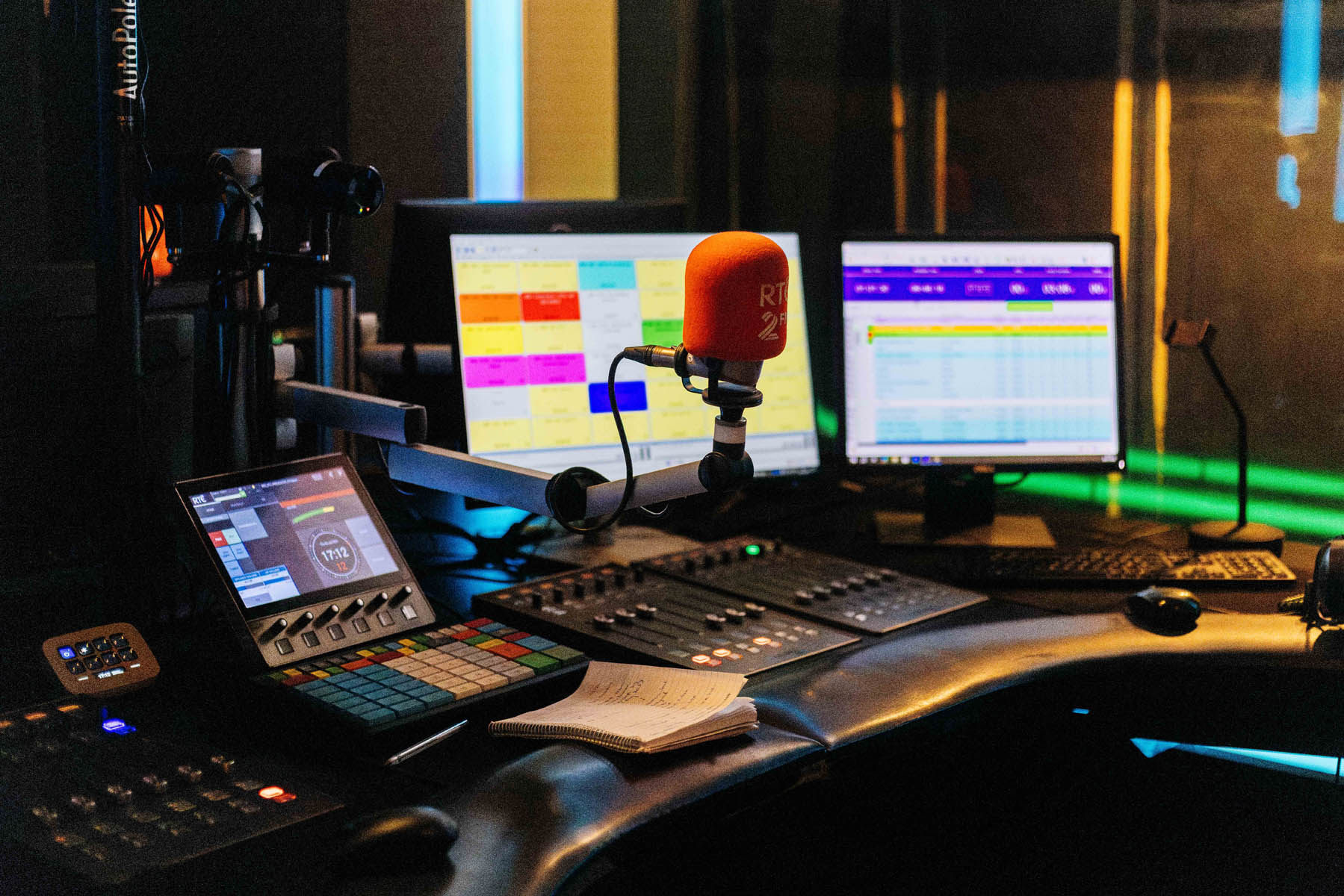
In an engineer-operated studio, an engineer controls the mix from the outer control room, while presenters and guests in the inner studio have basic facilities such as talkback and a cough button. Self-op studios are designed for music-based programmes, with presenters or DJs controlling the faders and computers themselves.
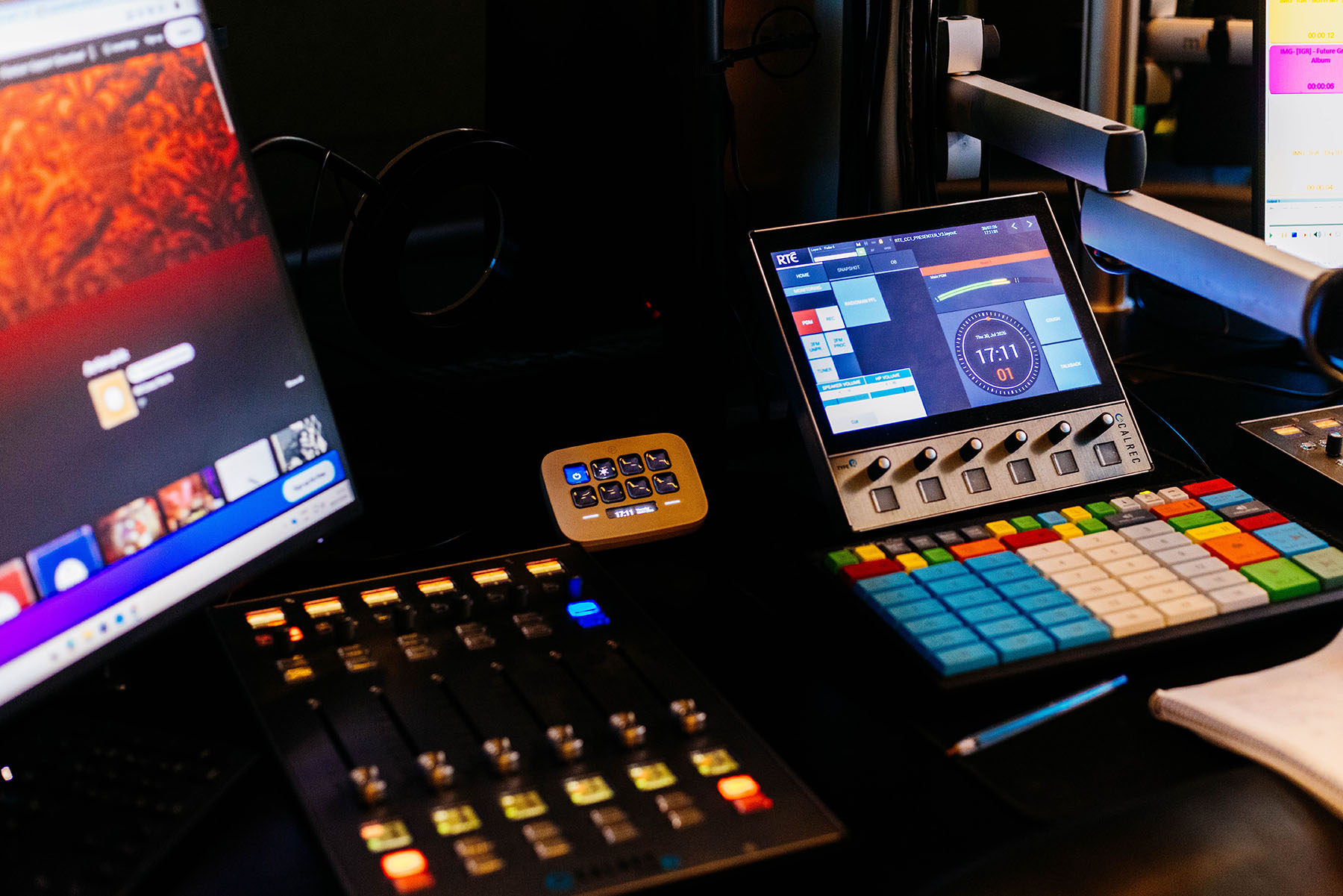
The hybrid configuration offers both options in one space: depending on the selected snapshot, the studio can operate as an engineer-controlled room, a self-op studio, or a combination of the two. Faders in the unused operating position can be disabled, allowing the relevant team to work without unnecessary controls getting in the way.
“The flexibility within the system is huge for us,” says Anthony. “We want somebody to be able to walk from one studio into another and not have to think about what they’re doing. If there’s a problem with a studio for whatever reason, and they have to run into another studio, they don’t have to readjust and find out what all the feeds are. It’s like going into the same studio again.”
The self-op consoles have also been standardised. Each has 18 faders arranged consistently, with primary and secondary Cores providing redundancy. Larger engineer-operated studios have between 36 and 42 faders, individual LSP panels plus a master LSP, alongside redundant Cores and the required I/O.
“These mic pres are fantastic. Absolutely fantastic.”
This consistency also includes the automation systems, with a standardised setup of five channels dedicated to automation play-out, including feeds from a backup machine. If the main machine fails, operators can switch to the backup in just five button presses, making changeover quick and straightforward.
“Hugely,” says Anthony when asked how much this standardisation has helped day to day operations. “Not only is the equipment the same – everyone is familiar with it – but when you go from one studio to another, you don’t have to bat an eyelid. You know exactly where you are. Same functionality, same fader layout, everything is the same.”
The move to Type R has also reduced the need for a wide range of separate microphone preamps and other hardware, simplifying the studio setup.
“Remember we also do a lot of live music from the studios, so that’s when you particularly need a high quality mic pre sound,” Anthony says. “We used to have a selection of mic pres, whether they’d be Liquids or Avalons or whatever, to kind of give us the sound we needed. We don’t have them anymore. These mic pres are fantastic. Absolutely fantastic.”
The simplification also brings a practical engineering benefit: fewer different pieces of hardware mean fewer things to maintain and support.
Networked audio and automated visual radio
The Type R rollout has also transformed the way RTÉ builds and connects its studios. Where a traditional installation could require extensive audio cabling, wiring and patch bays, the use of networks and audio over IP (AoIP) greatly simplify the physical infrastructure.
“Traditionally, if we built a studio like this, you’d have 100 audio pairs,” Anthony explains. “All your tallies, your GPIO cabling, patch bays, all the wiring and all the details that involved. That’s all gone now. We’re plugging in a few RJ45s, and it springs to life.”
At the network level, two spine switches in separate buildings connect to grandmaster and PTP clocks and GPS antennas, feeding leaf switches throughout the facilities. The red-blue network provides a fully redundant infrastructure, while audio can be routed wherever it is needed.
“It does everything that we need it to do. That flexibility under the hood is gold dust. It’s really important.”
Visual radio is another important part of the setup. All the studios use automatic microphone-triggered camera switching, handled by Broadcast Bionics Virtual Director.
“We send audio to it, and it uses that audio to detect and trigger a camera change. Simple as that,” says Anthony.
In Studio 10, the cameras feed into vMix over NDI, while the audio is sent to Virtual Director. Through the vMix API, Virtual Director changes the shots in vMix according to the active audio, while the smaller studios use an older visual radio system to switch their cameras.
“It’s very natural. It’s not clunky,” Anthony says. “You’re not chopping in between things. It ignores random noises – if somebody drops a pen or coughs, it won’t switch to them.”
Support without all the walking
The benefits of Type R extend beyond the studio workflow to how the system is supported and maintained. RTÉ has developed a support structure with first-line and second-line teams, before escalating to Calrec when required.
Crucially, those teams were involved in the World Cup development from the beginning, with
Roland highlighting the difference that early involvement makes, giving the support teams experience with the system before it went into full operation.
“We made sure to bring in all of our different support teams from the outset of this project,” he says. “That’s one of the things we learned: the more we bring these teams in and the sooner we get them involved, the easier it is to support the system. That way even if something bad were to happen, there’s so much confidence that we can deal with it.”
Roland highlighted the collaboration between Calrec’s engineering team, Synthax and the RTÉ engineering team which added to the success of the multi-mix Off-Tube system.
Anthony also points to the remote access features. Using the web GUI, he can access every element of every Core, and check individual desks without necessarily being physically present in the studio.
“Previously there was a lot of walking,” he says. “I don’t miss the walking haha. I should probably do more.”
Software maintenance is similarly approached in a controlled way. Updates are scheduled around the production operation, with studios cleared and tested before changes are made.
Rather than updating everything at once, RTÉ can update one studio, let it run for a couple of weeks and then move on to the next, providing a fallback if an unexpected issue appears.
“With everything being web-GUI-based, I can sit down at my desk and get access to every element of every core in the whole system, without moving. You can check every desk, and go through the whole lot. It’s fantastic. It’s a big change,” Anthony confirms.
Remote access also makes it easier to assess the state of the system and identify potential issues. RTÉ has introduced a screen in its main control room that uses Ember+ to display desk status indications, providing an early warning when a status light changes.
Software upgrades still require careful planning because the studios are in constant use. RTÉ’s method is to update one studio first, leave it in service for a period to check for any unforeseen issues, and then roll out the update across the remaining studios. Calrec can provide remote assistance and carry out checks after the upgrade.
Fewer boxes, fewer spares
Anthony also highlights a practical advantage of the Type R hardware design: the reduced number of spare parts required.
“With older desks, you might have had to have 20 or 30 different parts. With Calrec, it’s maybe five or so. So fewer bits to replace,” he says.
For RTÉ, the result is a platform that can serve demanding sports productions as well as everyday radio broadcasting, combining flexible routing and studio configurations with standardised operation, redundancy and a support model designed for long-term use.
“It was a pleasure to work with RTÉ and CT Ireland to take this project from concept through to operation,” says Simon Roome, Synthax UK’s Broadcast Sales Manager. “It’s a strong example of how Type R can bring multiple studios together in a fully connected, flexible solution that meets the needs of a major broadcaster like RTÉ. It’s been a real team effort, and we’re delighted to see the project up and running.”
Our thanks to Roland de Groot, Anthony McGing and RTÉ.
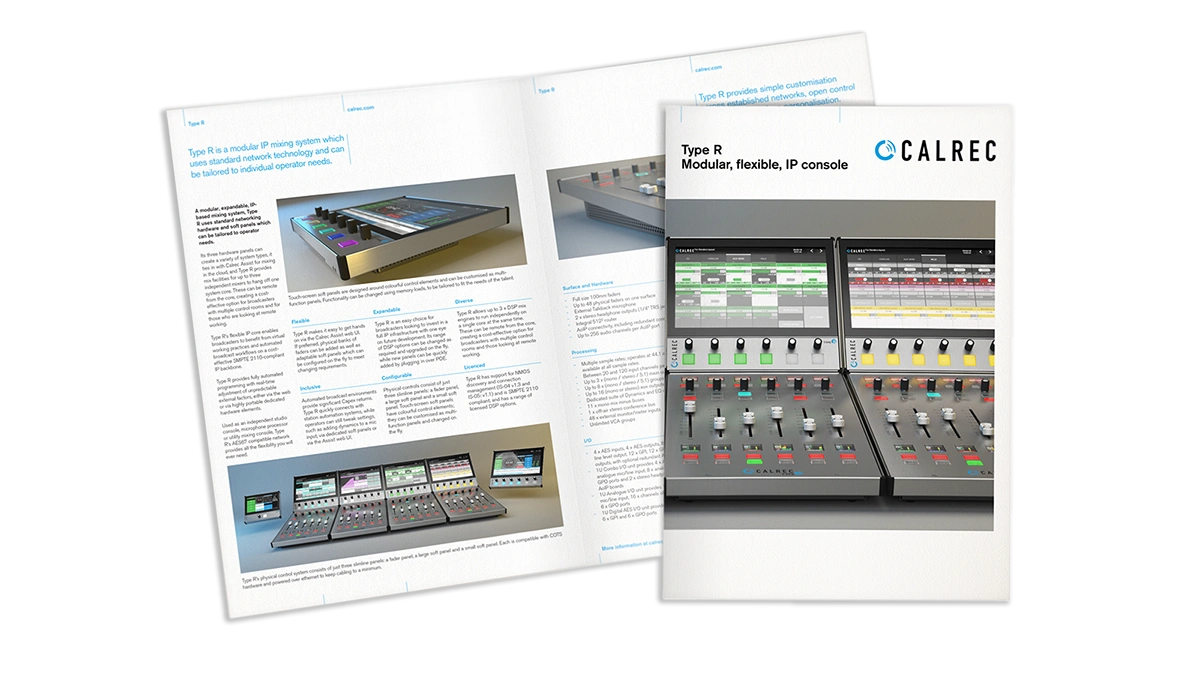 Interested in what Calrec Type R could do for your broadcast operation?
The RTÉ deployment is one example of how the platform can be adapted to different studio sizes, workflows and operational requirements.
The same Calrec family also includes solutions such as Type RT, Argo M 24/36/48 and Brio, giving broadcasters a range of options depending on their requirements.
For more information, or to discuss a Calrec system for your own facility, contact the Synthax Audio UK team.
Find out more about Calrec Type R

If you’d like to know more about the Calrec Argo M, Brio, Type R and Type RT (or would like to arrange a practical demonstration), give us a call on 01727 821 870 to speak to one of our team, or contact us here.