

















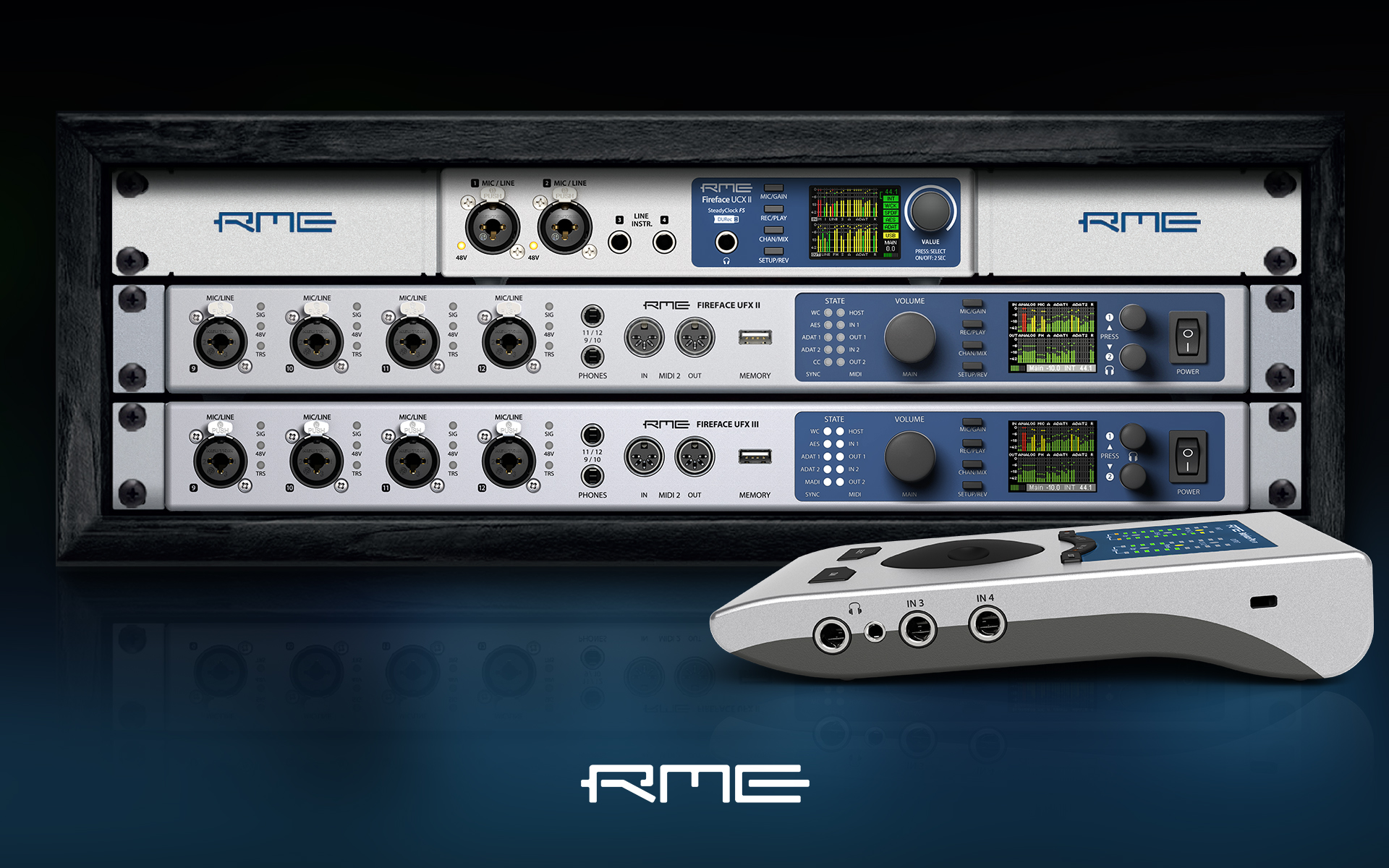
Which RME Fireface Audio Interface is Right for You?
Choosing an audio interface isn’t just about specifications. Reliability, driver performance and workflow can have just as much impact on your day-to-day experience as sound quality.
That’s where RME has earned its reputation. For over 30 years, the company has been designing professional audio interfaces that are trusted by musicians, producers, broadcasters and live engineers around the world. While every current Fireface delivers exceptional audio quality, what really sets RME apart is its software ecosystem and long-term support.
Watch our deep-dive video below, or scroll down for an overview of each of the models in the RME Fireface range of premium audio interfaces.
Where to buy
If you’d like to buy an RME audio interface, see our list of Authorised UK Dealers. Purchasing from one of them gives you UK support and entitles you to a free extended 5 year warranty, so long as you register within 30 days of purchase.
Drivers? The best in the business!
RME develops its USB drivers entirely in-house, delivering outstanding low-latency performance and exceptional stability on both Mac and Windows. The company is also well known for supporting its products long after release, with driver updates available for interfaces dating back many years. It’s one of the reasons you’ll still find older RME interfaces in daily professional use.
What is a driver?
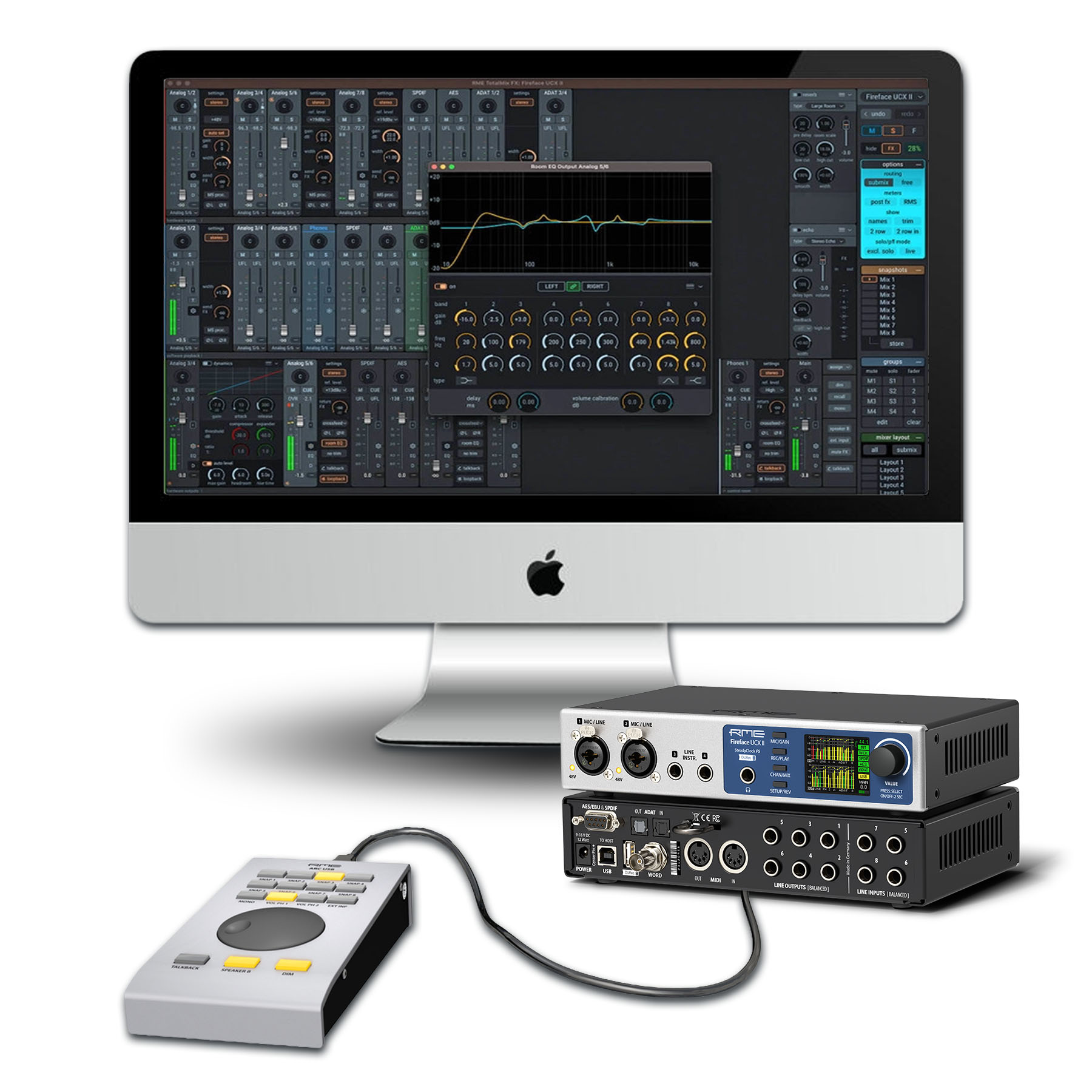 A driver is a piece of software that lets your computer and external hardware “talk” to each other.
Most computer peripherals require a driver to function, although many modern devices are class compliant, meaning they can use the operating system’s built-in driver without requiring additional software from the manufacturer.
For audio devices, operating systems include their own built-in drivers, such as Windows High Definition Audio Device on Windows and Core Audio on macOS. These provide broad compatibility and are perfectly adequate for many applications.
Some manufacturers however such as RME prefer to develop their own dedicated drivers, instead of relying on the operating system’s generic driver. This gives them complete control over how their hardware communicates with the computer, allowing them to optimise performance specifically for their products.
The result is lower round-trip latency, greater connection stability, and the level of reliability required for professional recording, mixing, mastering and live sound applications. RME’s drivers in particular have earned legendary status for their exceptional stability, and are widely regarded as the best in the industry.
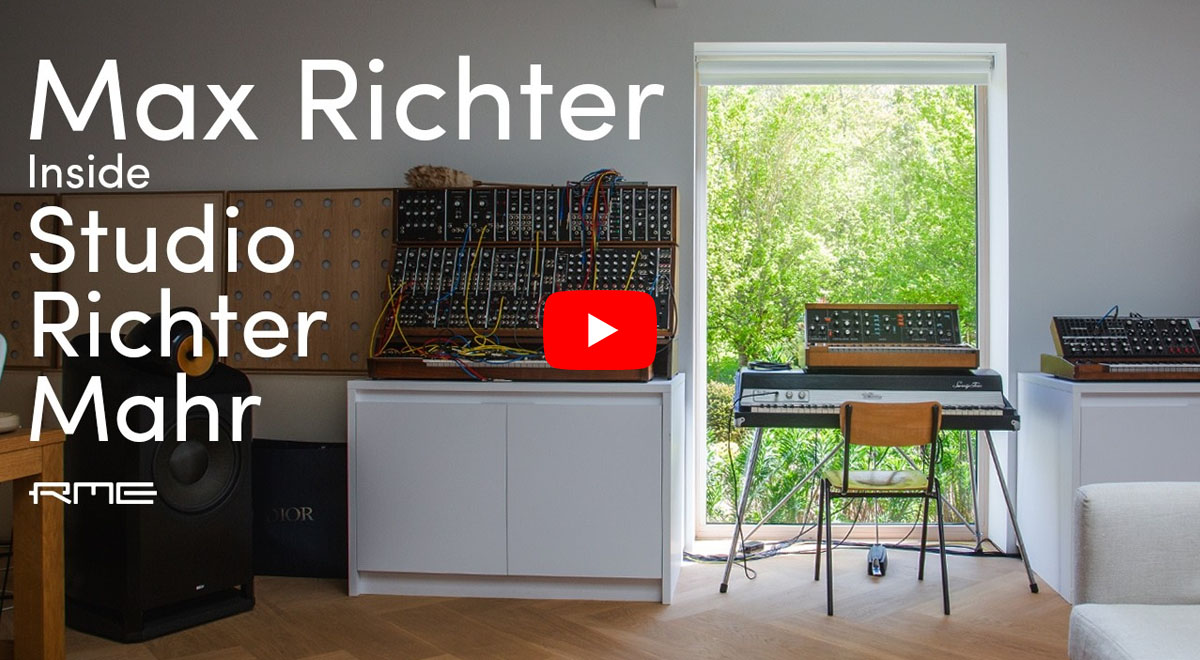
Max Richter on RME Audio
Contemporary classical composer Max Richter on how RME forms the audio infrastructure at Studio Richter Mahr.
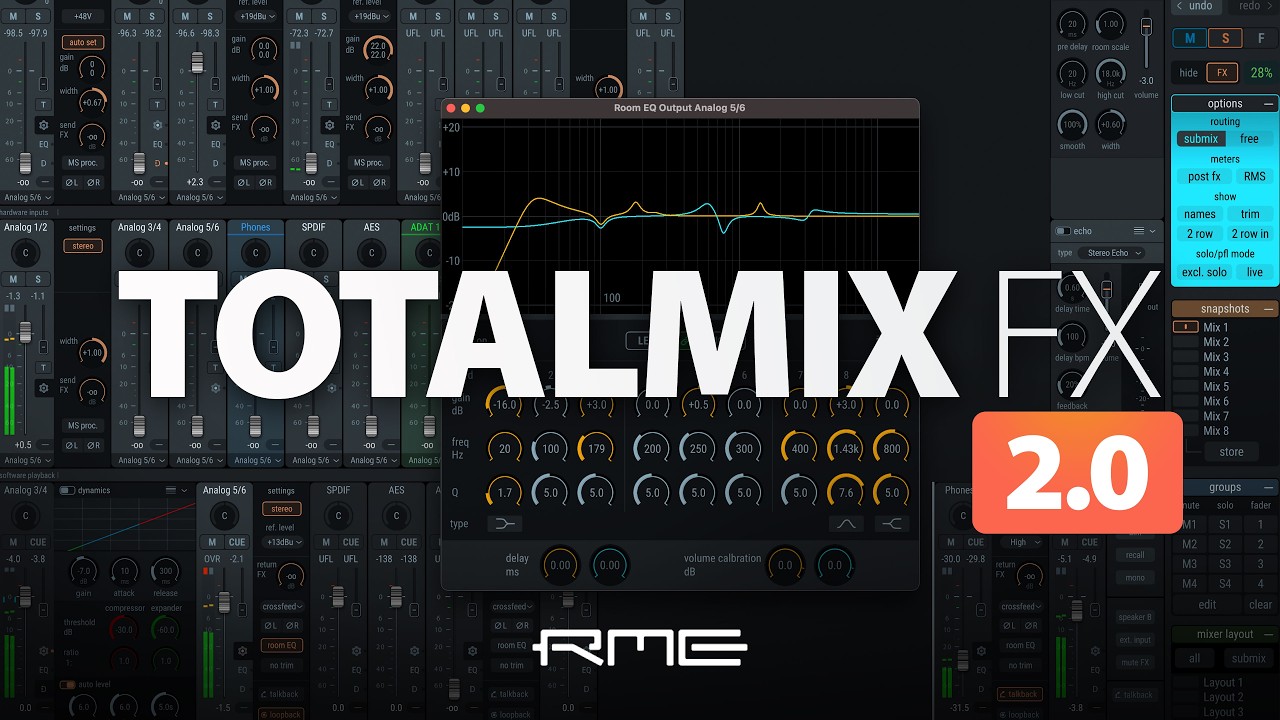
Total Control with TotalMix FX
Every current Fireface also includes TotalMix FX, RME’s powerful DSP-based mixer and routing software. Running directly on the interface rather than your computer, TotalMix FX allows you to create independent monitor mixes, route signals between hardware and software, use Loopback for recording internal audio, switch between multiple speaker systems and apply onboard DSP processing.
Compatible models also include features such as Dynamics processing, Room EQ and DURec standalone recording, making TotalMix one of the biggest reasons professionals choose RME.
How to choose an RME Audio Interface
Because the sound quality is consistently excellent across the range, choosing the right Fireface really comes down to three questions:
- How many inputs and outputs do you need?
- Will you be recording in the studio, on the move, or both?
- Do you need room to expand your setup in the future?
We’ve these questions in mind, let’s dive into the range.

Premium USB Audio Interfaces
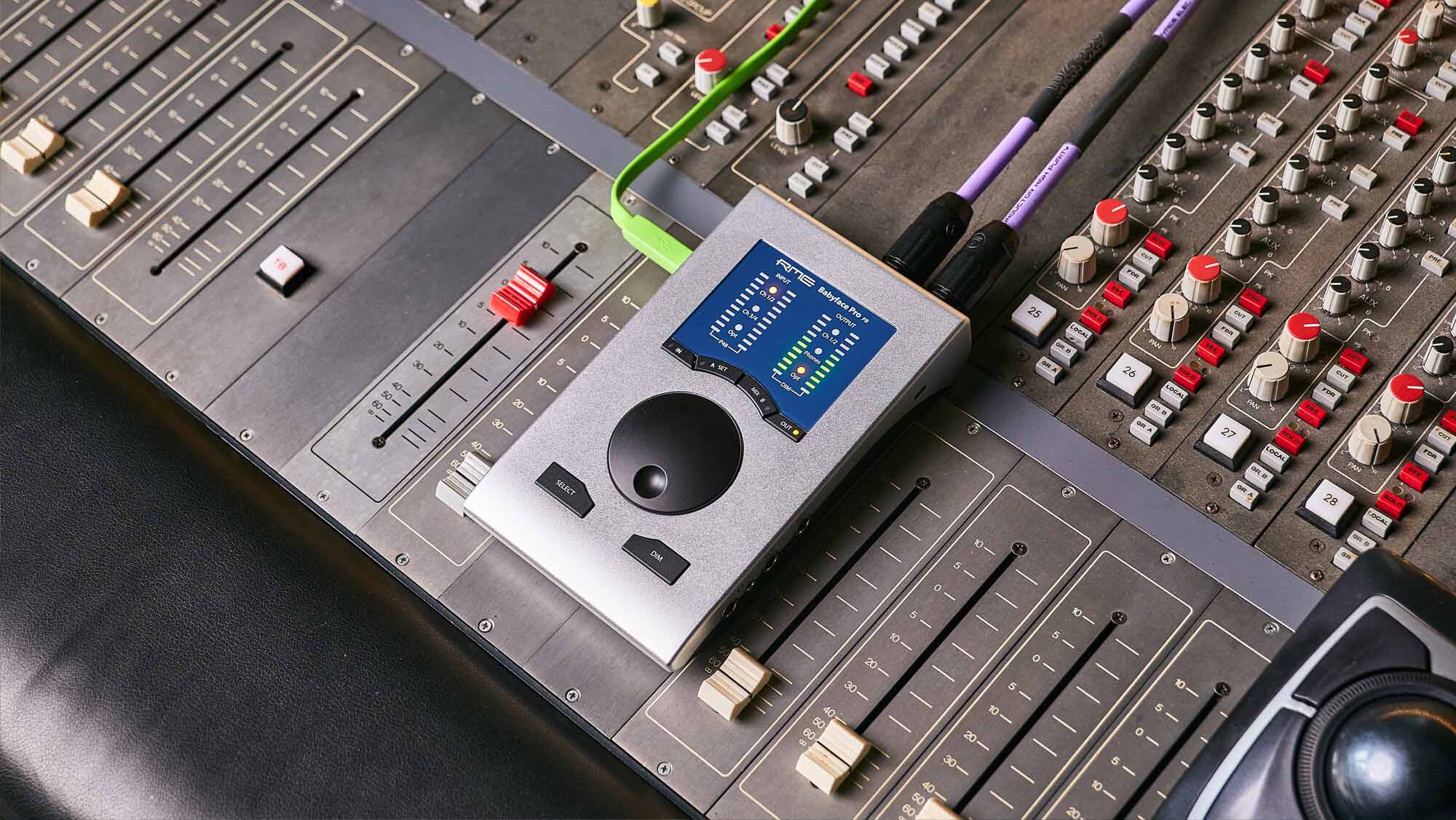
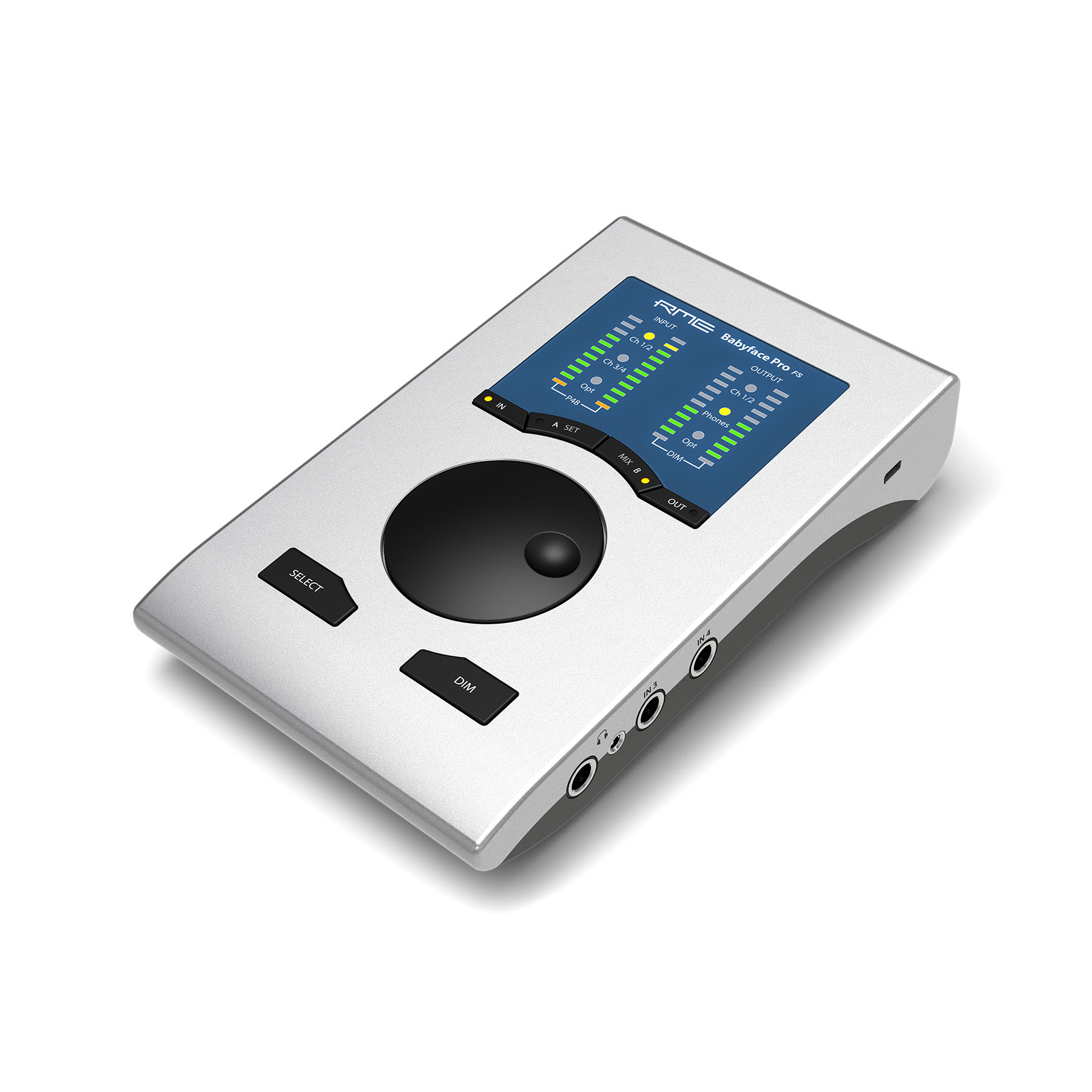 RME Babyface Pro FS
24-Channel USB desktop interface
Although it’s not technically part of the Fireface range, the Babyface Pro FS deserves a place here. It delivers the same professional recording quality in RME’s most compact and portable interface, making it ideal for desktop production, mobile recording and smaller studio setups. ADAT connectivity also allows you to expand the interface as your needs grow. It’s also USB bus-powered, meaning no external power supply is needed.
Unlike the larger Fireface models, the Babyface Pro FS doesn’t include the Dynamics section or Room EQ within TotalMix FX, so users who need onboard compression or DSP-based room correction may want to consider the UCX II instead.
Connections
- 12 Input / 12 Output channels
- 4 x Analogue Inputs (Mic / Line / Instrument)
- 4 x Analogue Outputs (2 x XLR, 2 x Headphones)
- 1 x ADAT I/O or 1 x SPDIF I/O optical
- 1 x MIDI I/O (via breakout cable)
- USB 2.0 (USB 3 / USB-C compatible)
Best for:
- In-the-box producers
- Rappers
- Singer-songwriters
- Content creators
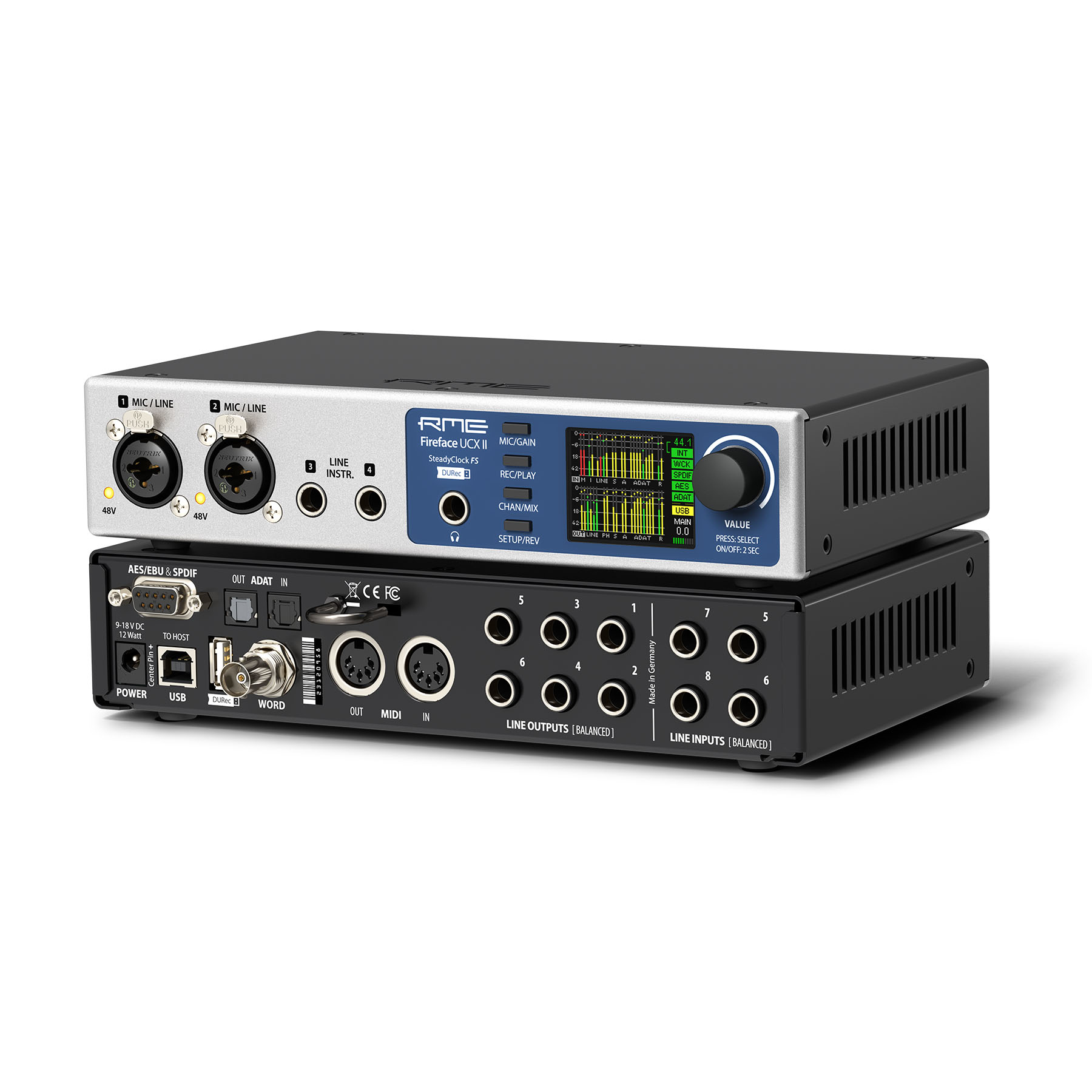 RME Fireface UCX II
36-Channel USB 1/2U interface
The Fireface UCX II is a compact half-rack interface that brings together an impressive combination of connectivity and advanced features. It includes ADAT expansion, DURec standalone recording, AutoSet automatic gain control, Dynamics processing and Room EQ, making it one of the most capable interfaces available for home and project studios.
If you want the full Fireface experience in the smallest possible package, the UCX II is the natural choice.
Connections:
- 20 Input / 20 Output channels
- 8 x Analogue I/O
- 2 x Mic/ Line Preamps, digitally controlled
- 2 x Line / Instrument inputs, digitally controlled
- AES/EBU and SPDIF I/O
- ADAT I/O
- Word clock I/O (switchable)
- MIDI I/O (via breakout cable)
- DURec / Direct connection for ARC USB
- USB 2.0 (USB 3 / USB-C compatible)
Best for:
- Home and project studios
- Hybrid producers
- Live recording and performance
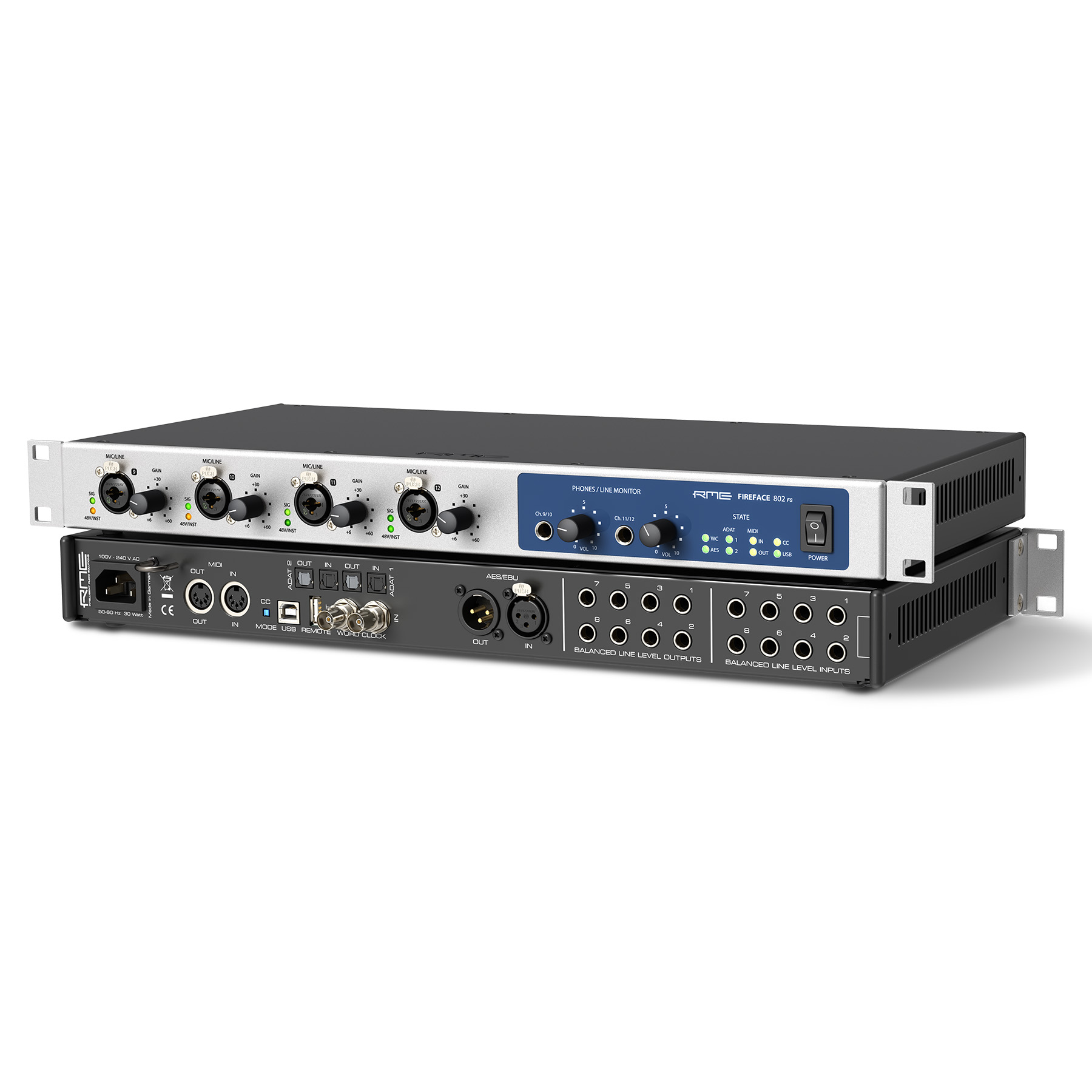 RME Fireface 802 FS
60-Channel USB 1U interface
The Fireface 802 FS offers increased built-in connectivity for studios that need more analogue I/O without stepping up to the UFX series. With 60 channels available across its analogue and digital connections, dual ADAT ports and multiple headphone outputs, it’s an excellent centrepiece for medium-sized recording studios.
One key difference is its traditional analogue gain controls, rather than the digitally controlled preamps found on the UCX II and UFX models. For some engineers that’s a familiar and welcome workflow, while others may prefer the convenience of remote gain control and preset recall.
Connections:
- 30 Input / 30 Output channels
- 12 x Analogue I/O
- 4 x Mic/Instrument Preamp, analogue controlled
- 1 x AES/EBU I/O
- 2 x ADAT I/O (or 1 x ADAT I/O plus 1 x SPDIF I/O)
- 1 x Word Clock I/O
- 1 x MIDI I/O
- Direct connection for ARC USB
- USB 2.0 (USB 3 / USB-C compatible)
Best for:
- Small and medium studios
- Users who prefer a simplified interface
- Engineers who like analogue controls
Phaeleh on RME Audio Interfaces
Electronic music wizard Phaeleh gives us an insight into his musical universe and the role of RME Audio for production and mastering.
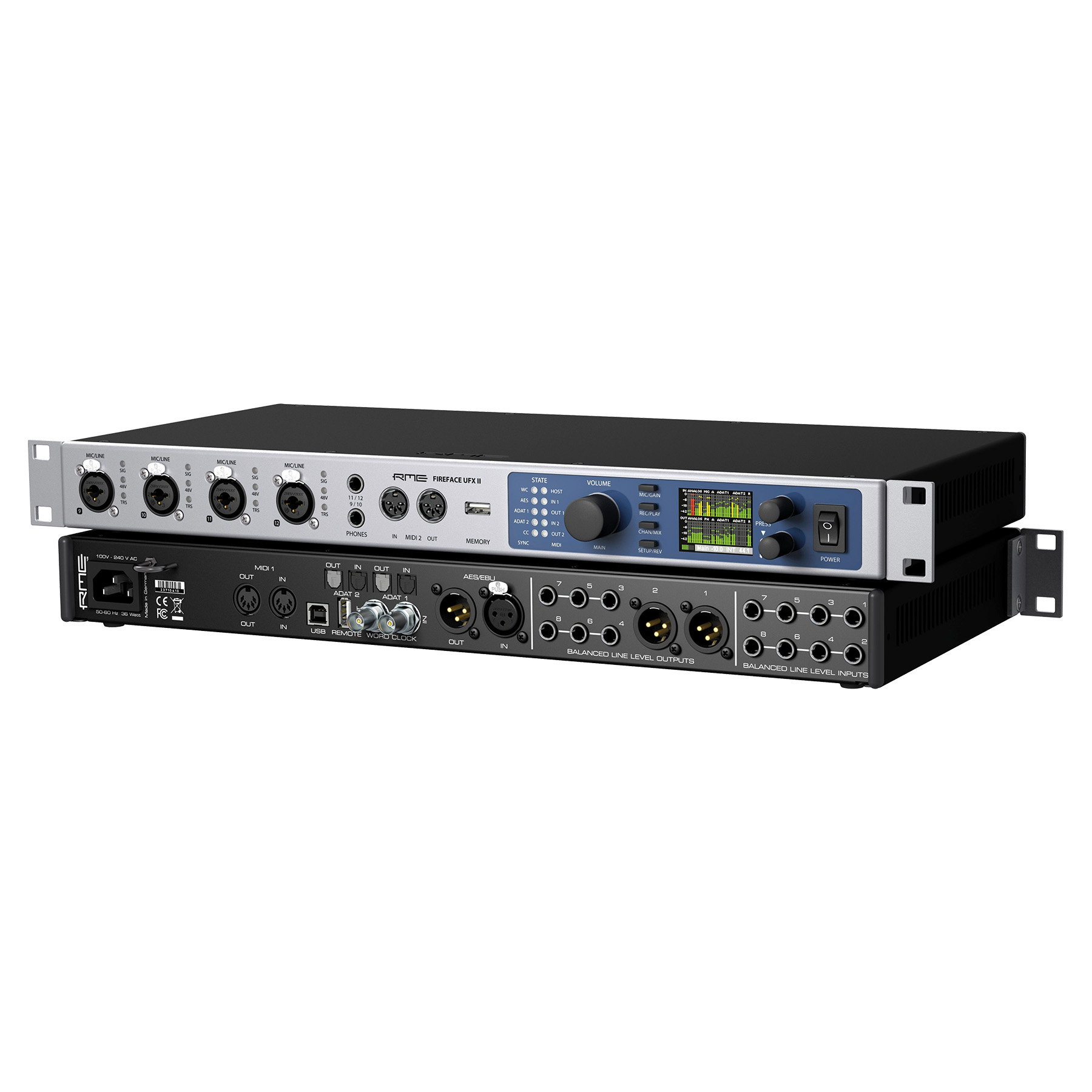 RME Fireface UFX II
60-Channel USB 1U interface
The Fireface UFX II builds on the UCX II with significantly expanded connectivity while retaining the same advanced workflow features, including digitally controlled preamps, DURec recording and the full TotalMix FX feature set.
If your studio has outgrown a compact interface but you don’t require MADI connectivity, the UFX II provides everything needed for demanding recording, mixing and immersive audio production.
Connections:
- 30 Input / 30 Output channels
- 12 x Analogue I/O
- 4 x Mic/Instrument Preamp, digitally controlled
- 1 x AES/EBU I/O
- 2 x ADAT I/O (or 1 x ADAT I/O plus 1 x SPDIF I/O)
- 1 x Word Clock I/O
- 2 x MIDI I/O
- DURec / Direct connection for ARC USB
- USB 2.0 (USB 3 / USB-C compatible)
Best for:
- Established studios
- Band and ensemble recording
- Dolby Atmos production
- Modular synth setups
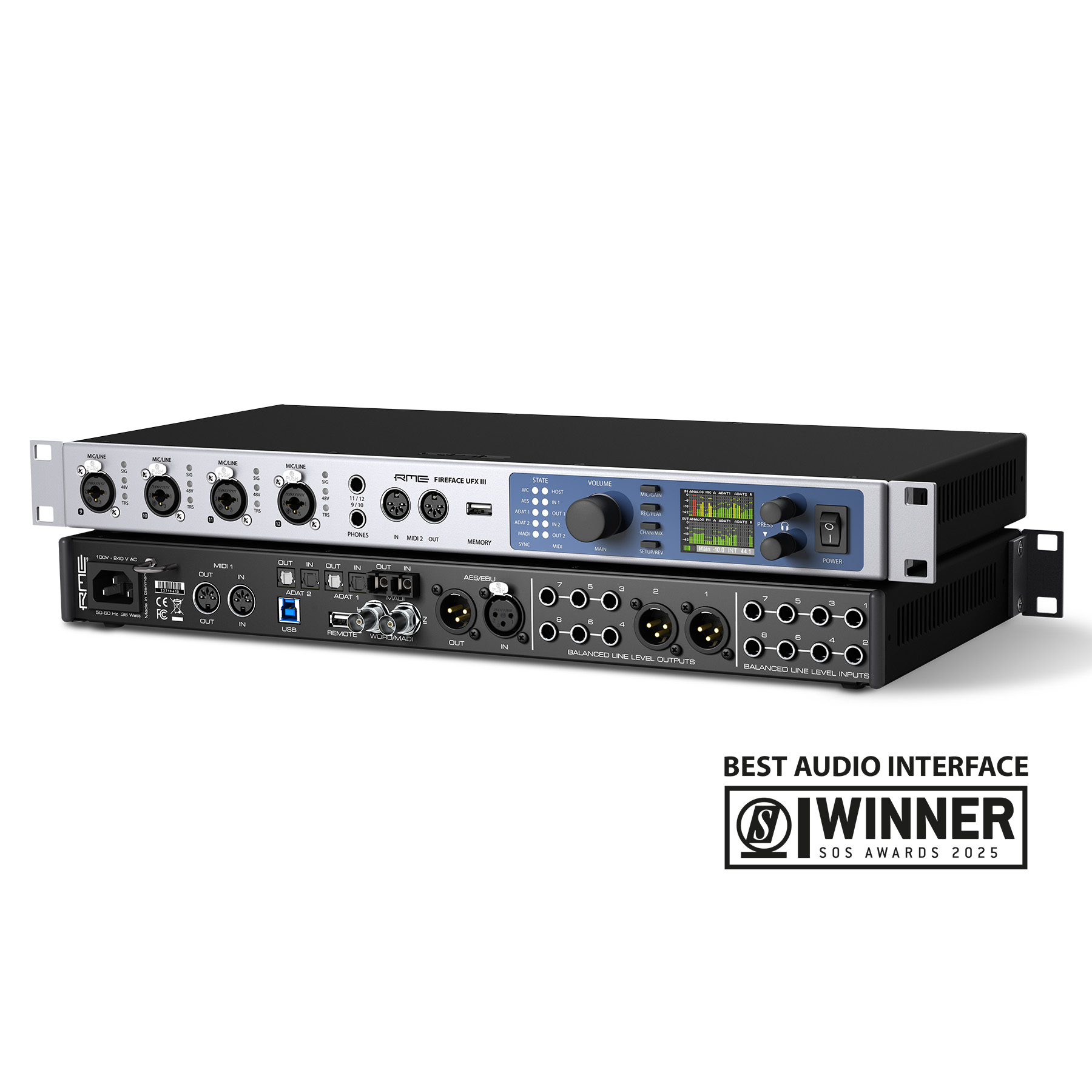 RME Fireface UFX III
188-Channel USB 1U interface
The Fireface UFX III is RME’s flagship USB audio interface. Its defining feature is MADI connectivity, allowing up to 94 simultaneous input channels and straightforward integration with large recording systems, stage boxes, converters and mixing consoles.
For larger studios, live recording, broadcast and post-production, the UFX III delivers the highest channel counts and greatest routing flexibility in the Fireface range.
Connections:
- 94 Input / 94 Output channels
- 12 x Analogue I/O
- 4 x Mic/Instrument Preamp, digitally controlled
- 1 x AES/EBU I/O
- 2 x ADAT I/O (or 2 x SPDIF Optical I/O)
- 1 x Word Clock I/O / MADI Coaxial
- 1 x MADI optical I/O
- 2 x MIDI I/O
- 1 x USB 3.0
- USB 3.0 (USB-C compatible, USB 2.0 limited to 128 channels)
- DURec / Direct connection for ARC USB
Best for:
- High-end productions
- Large-scale recording sessions
- Maximum routing flexibility
- Expanded I/O systems
- Flagship performance
Which Fireface Should You Choose?
If portability is your priority, the Babyface Pro FS is the ideal companion for recording and production on the move.
For most musicians and producers, the Fireface UCX II offers the best balance of size, connectivity and advanced features, making it an excellent choice for home and project studios.
If your studio simply needs more built-in analogue I/O with a straightforward, traditional workflow, the Fireface 802 FS is a solid option.
The Fireface UFX II is designed for larger professional studios that need comprehensive connectivity and advanced features without requiring MADI.
Finally, if your workflow involves large-scale recording, broadcast or expandable MADI systems, the Fireface UFX III is RME’s most capable interface.
Whichever model you choose, every RME interface is built around the same principles: exceptional sound quality, class-leading driver stability, flexible routing through TotalMix FX, and long-term reliability that has made Fireface interfaces a trusted choice in professional studios around the world.
Other options
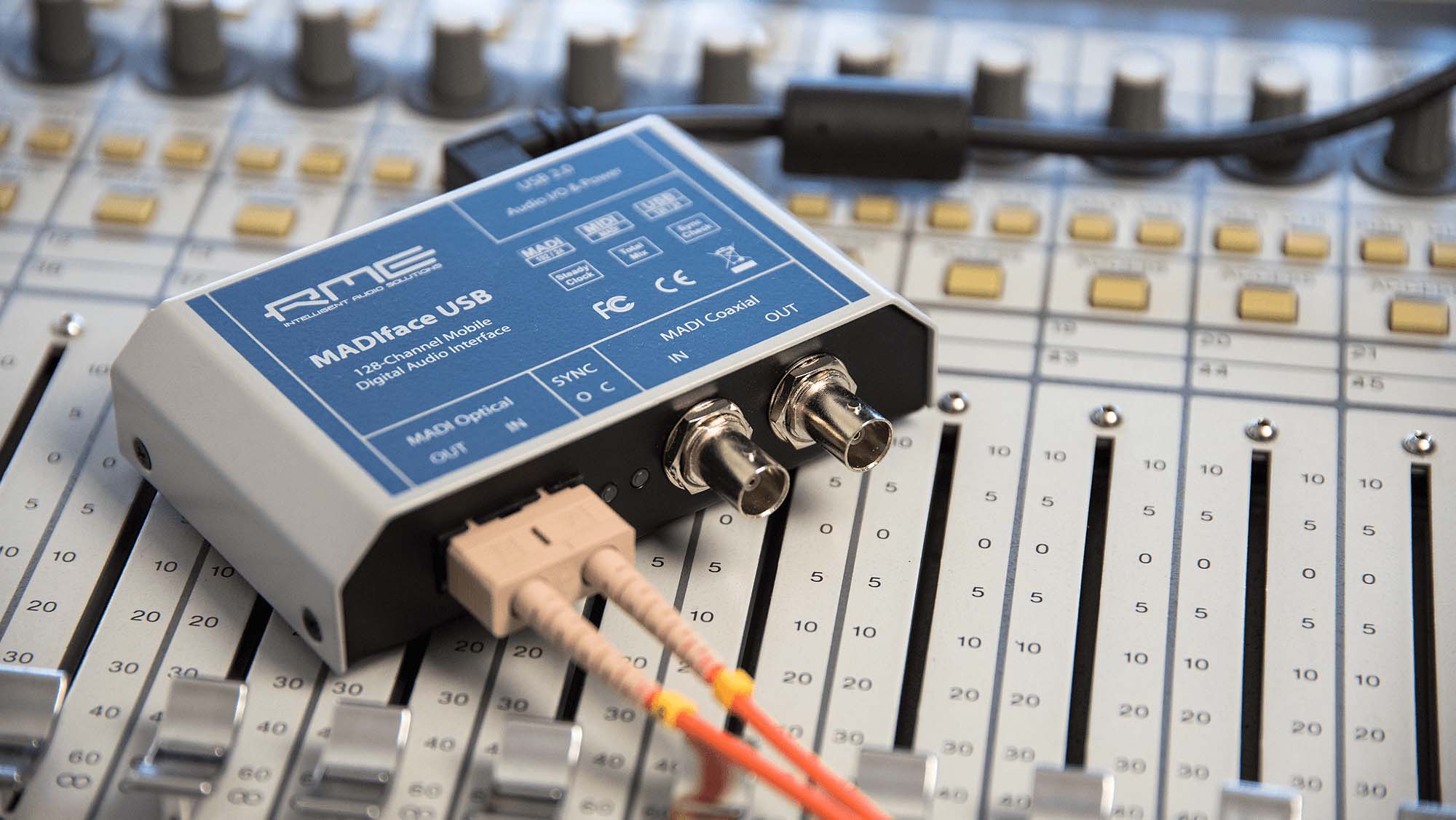
RME also produces a number of other options, primarily designed for specific use cases such as working with specialist digital formats. For interfaces this includes the Digiface Series and MADIface Series, whereas a number of PCIe options are also still available for desktop users and those using a chassis.
We’ve chosen to focus on the Fireface Series in this guide as they’re the most popular devices for modern music recording, however you can explore the full range below:
See the full range of RME Audio devices